
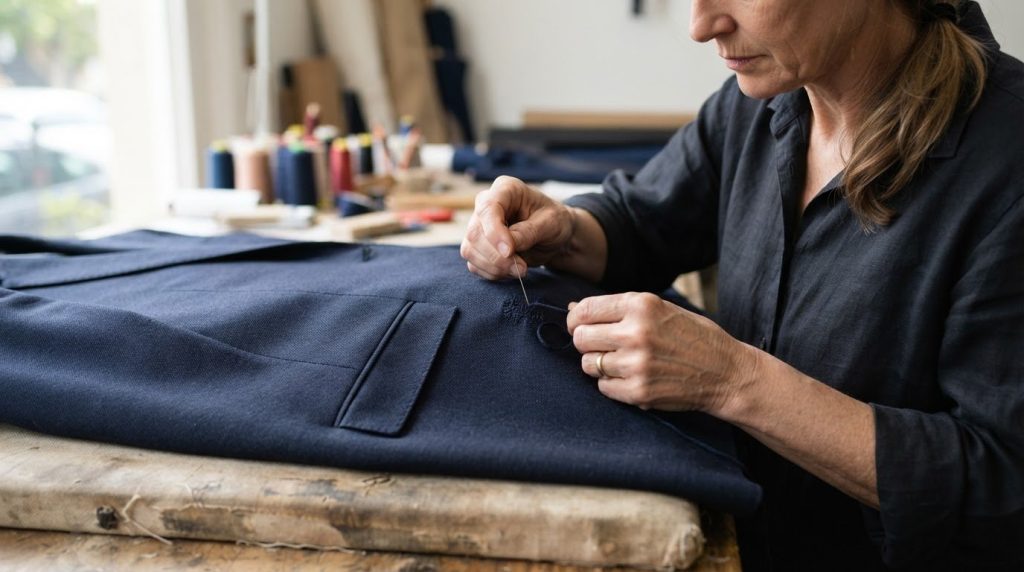
The finest investment garments are defined by their craftsmanship and lasting appeal. Thoughtful investment piece clothing care helps preserve the fit, fabric and finish that make a wardrobe staple worth wearing season after season. Timely repairs and suitable cleaning both help maintain it.
It’s natural to value pieces that feel beautifully made and reliably suited to your life. This guide explains what makes a garment an investment piece and how professional alterations, repairs, air-drying, steaming and appropriate cleaning can help maintain its appearance and wearability.
At Bancrofts Dry Cleaning, Nick Bancroft, the fourth generation of the Bancroft family, continues a history spanning 4 generations since 1913, caring for Melbourne’s best dressed and well known people. From Toorak, South Yarra and surrounding areas to all areas of Melbourne, the team brings specialist garment care, alterations and repairs, and the GreenEarth® Cleaning process to treasured wardrobe pieces.
Key Takeaways
- Timely repairs and considered alterations can help preserve a garment’s fit, function and continued place in your wardrobe.
- Choose wardrobe staples for how often you’ll wear them and how well they suit your climate, routine and existing pieces.
- Air-drying and professional steaming can help maintain the shape and finish of delicate garments, including cashmere.
- Learn how professional dry cleaning, GreenEarth® care and household textile cleaning can support the preservation of valued pieces.
Repairing and altering clothing to extend its use
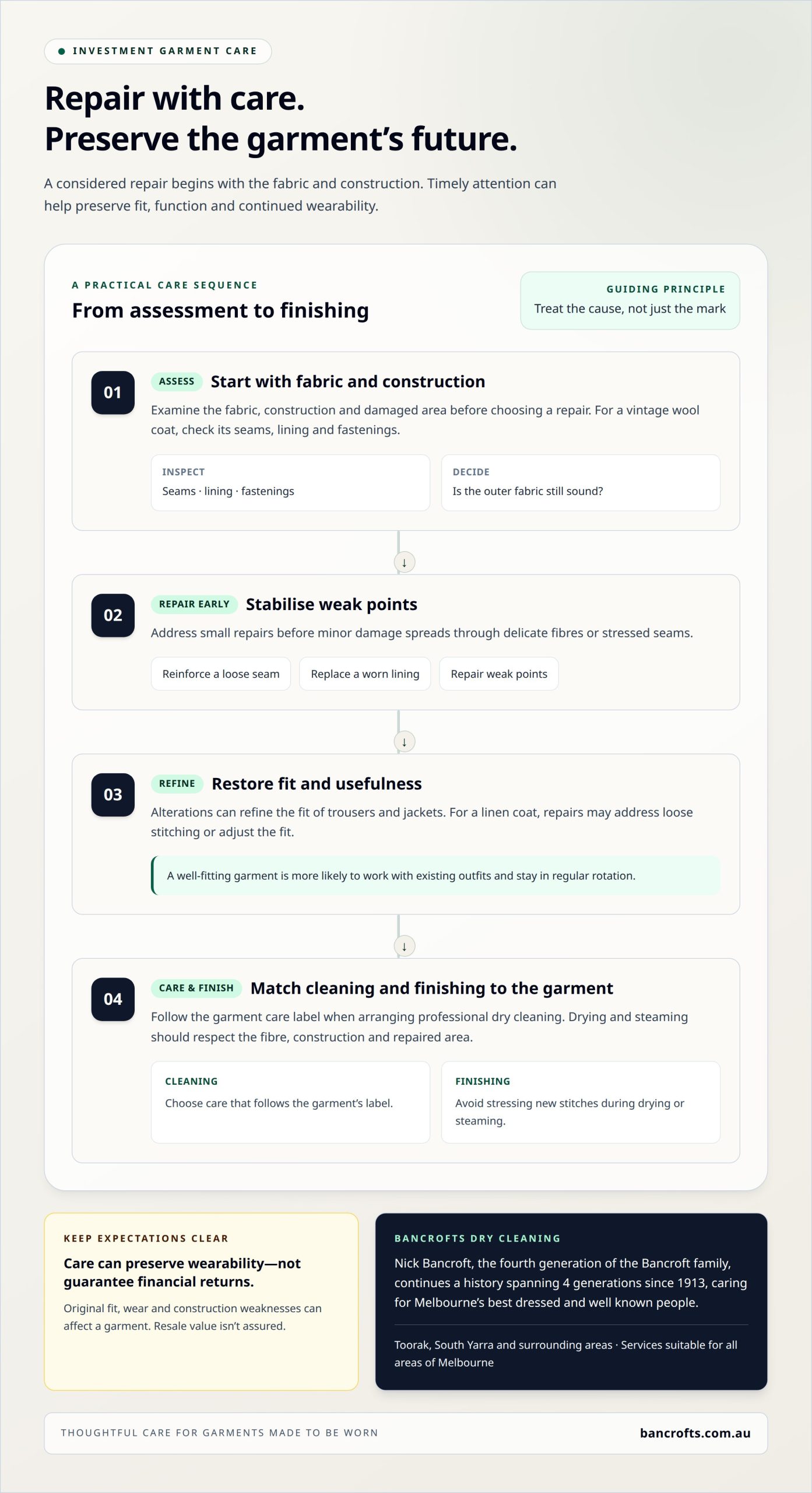
A professional repair starts with assessing the fabric, construction and damaged area. Reinforcing a loose seam or replacing a worn lining can keep a coat wearable, while alterations can refine the fit of trousers and jackets. A well-fitting garment is more likely to work with existing outfits and stay in regular rotation.
For a vintage wool coat, a specialist can examine its seams, lining and fastenings before repairing weak points. Relining may extend its use if the outer wool remains sound. Addressing small repairs early can prevent minor damage from spreading through delicate fibres or stressed seams.
A linen coat also benefits from fabric-specific care. Professional dry cleaning should follow its care label, while alterations can address loose stitching or adjust the fit. Appropriate cleaning and precise repairs help preserve the coat’s structure, colour and place in a considered collection.
Luxury clothing carries risks: the original fit may not suit you, wear can expose construction weaknesses, and resale value isn’t assured. Repairability matters, but care can preserve wearability, not guarantee financial returns. That distinction is central to investment piece clothing care: assess each garment for lasting utility and continued wear.
Wardrobe staples such as blazers, denim, outerwear and footwear
Choose staples by how often they suit your routine, not by trends alone. A well-cut blazer, dependable denim and comfortable leather footwear can anchor work and weekend outfits. Muted colours combine easily, while a familiar silhouette helps a wardrobe feel cohesive. In warm weather, linen offers a considered option for breathable layering.
Consider a garment’s construction, how often you’ll wear it, and whether repairs can keep it useful. A timeless piece that works with clothes already in your wardrobe can serve well over time. These considerations guide investment piece clothing care from the outset.
For Melbourne’s warmer conditions, build around linen and lighter layers, keeping wool and cashmere for cooler days. Wear these fibres gently, protect them from moths, and store knitwear folded to help preserve its shape. Investment piece clothing care also means storing seasonal garments clean and protected.
Let personal style guide your collection. Consider whether a blazer’s silhouette suits your usual outfits and whether its colours coordinate with pieces you own. Choose essentials you’ll reach for repeatedly, rather than assembling a wardrobe around imagined occasions.
Air-drying and steaming to preserve garments
Professionals match drying and finishing to each garment’s fibre, construction and care label. Delicate pieces may be air-dried to limit heat exposure; controlled steaming can relax creases without pressing directly against the fabric. For cotton shirts, finishing also considers the garment’s weight and shape, helping it remain versatile between wears.
Cashmere needs especially considered handling. A well-known example is a black cashmere jumper worn for seven years, hand-washed and dried flat. Professional care can follow that gentle approach where the label permits, supporting the knit’s shape as it dries. Steaming is assessed separately, since fibre and finish affect suitability.
For storage, wool and cashmere knitwear is best kept folded; silk should be clean and protected from snagging. Leather needs a dry, shaded place, while denim should be stored clean and fully dry. A professional assesses stains by fibre and residue, then selects a compatible treatment before cleaning. Avoid rubbing or applying household products, which can spread marks or affect colour. If a seam is repaired, steaming and drying should respect that area, preserving the beautiful finish without stressing new stitches.
The practical approach is to favour air-drying, gentle washing and occasional steaming as choices for preserving clothing fabric and shape. Keep each choice connected to that aim: care is not simply about completing a wash, but about handling clothing in ways that help maintain its material and form. Air-drying, gentle washing and occasional steaming can therefore be considered together as elements of clothing care, rather than as unrelated tasks.
When possible, air-dry delicate fabrics; this practice is recommended for extending garment life. The point is to give delicate clothing a drying option within the broader effort to preserve garments. For care decisions, keep the focus on fabric and shape: gentle washing and occasional steaming also belong to the recommended approach. Whether considering one garment at a time or care as a routine, these methods keep attention on preserving clothing material and form.
What clothing items are considered investment pieces?
An investment piece is chosen for enduring use, not simply its label or original price. A tailored blazer, well-constructed wool coat, cashmere knit, linen jacket or quality leather item may qualify when it suits your routine. A wedding gown or evening dress can also carry lasting personal value, even if worn less often. Consider whether its fabric, construction and care requirements suit your life.
Picture several occasions for a potential purchase. A blazer that works for meetings, dinners and travel may earn regular wear; a coat suited to Melbourne’s cooler days may become a reliable seasonal layer. Choose colours and silhouettes that coordinate with clothes you already own, rather than relying on passing trends.
Investment value can be practical or emotional. A vintage wool coat with sound fabric may remain treasured through careful maintenance, while a well-made linen piece can serve across warm seasons. Look for neat seams, a considered lining and fastenings that can be repaired. Some cherished garments remain in rotation for over 10 years, showing how lasting usefulness can matter more than novelty. Select pieces you’ll wear and care for, not just admire.
A commenter described a hypothetical 20-year-old saving to buy a Savile Row suit costing 5k; the author said there is a small chance of choosing a suit style still liked in 50 years.
GreenEarth Dry Cleaning and the GreenEarth dry cleaning solution
GreenEarth® Dry Cleaning is an eco-friendly process that uses no hazardous chemicals and is non-toxic to the environment. Dry cleaning uses a solvent rather than water to lift soil from garments. It can suit delicate pieces when their care label and construction support professional cleaning.
Gentle, label-led cleaning can help garments retain their appearance, but results depend on the fabric and construction. Bancrofts Dry Cleaning assesses fabric, trim and condition before cleaning, an important step for eveningwear, embellished gowns and other garments where surface details are part of the design.
Environmental benefits matter alongside fabric care. The GreenEarth process avoids hazardous chemicals, supporting a non-toxic approach to garment cleaning and reducing reliance on harsher substances. It can help preserve treasured clothing without treating every textile as if it were the same. For investment garments, careful inspection, label-led handling and appropriate finishing remain essential; no single cleaning process suits every fibre or construction.
Cleaning Household Items
Household textiles such as bed linen, table linen and quilts need care matched to their fibre, construction and finish. A professional assessment considers stains, loose seams, delicate trims and fillings that may shift during cleaning. This helps determine an appropriate treatment while protecting the textile’s texture and shape.
Professional cleaning and pressing can refresh frequently used bed linen and table linen while maintaining a smooth finish. Linen napkins, for example, need handling suited to their weave and decorative details. Checking care labels and separating textiles by fabric helps guide cleaning.
Quilts require particular attention to their filling and stitching. Cotton batting can bunch and become clumpy in a washing machine, so its construction should be assessed before cleaning. A professional can consider the outer fabric, seams and filling together, rather than treating the quilt like ordinary bedding. This careful approach also suits treasured household pieces with sentimental value, helping maintain their appearance and usefulness. For a coordinated refresh, household textile cleaning can include bed linen and table linen alongside other suitable items, with pressing considered according to each piece’s material and finish.
Complimentary pick-up and delivery service
Complimentary pick-up and delivery can fit professional garment care into a busy Melbourne routine. It helps when workwear, shirts or occasion pieces need attention, but a separate trip is inconvenient. Collection and return make it easier to arrange care for valued garments alongside daily commitments.
The service suits shirts for laundering, garments requiring dry cleaning, leather or suede pieces, and wedding gowns needing specialist cleaning or restoration. Bringing different items together for collection can simplify care across distinct needs. Each piece is handled according to its fabric, construction and care label.
For Toorak, South Yarra and surrounding areas, as well as all areas of Melbourne, collection and delivery connect professional garment care with everyday convenience. It can be useful for coordinating work shirts with a special-occasion gown or arranging cleaning for leather pieces without carrying them across town. The returned garments can then be placed back into their usual rotation or kept ready for an upcoming occasion.
Bancrofts Dry Cleaning
Bancrofts Dry Cleaning in South Yarra is a practical next step when a valued garment needs professional attention. Its services suit wardrobe staples and special pieces whose fabric, finish or construction calls for careful handling.
For investment pieces, Dry Cleaning provides professional care beyond routine home cleaning. Shirt Laundry supports the crisp finish of frequently worn shirts. Wedding Gown Cleaning & Restoration is available for bridal garments with personal significance, while Leather & Suede Cleaning & Restoration addresses the particular care needs of these materials.
Care is guided by each garment’s fabric, construction, condition and care label. This helps determine appropriate handling for a treasured coat, tailored shirt or special-occasion gown. Choose professional care when a garment’s finish or material needs considered attention. For thoughtful care of your wardrobe, contact Bancrofts Dry Cleaning.
Frequently Asked Questions
How should investment clothing be professionally washed and cared for?
Investment garments need cleaning suited to their care label, fibre and construction. For a blazer spill, a professional inspects and treats the mark, selects dry, wet or hand cleaning, then presses, hand-finishes and checks it before packaging. Nick Bancroft, the fourth generation of the Bancroft family, carries its history spanning 4 generations since 1913, caring for Melbourne’s best dressed and well known people across Toorak, South Yarra and surrounding areas, and all areas of Melbourne.
How can you remove common stains from quality clothing safely?
Have a professional assess the stain, fabric and residue, then choose a compatible treatment. Avoid rubbing or applying household products, as these can spread marks or affect colour.
