
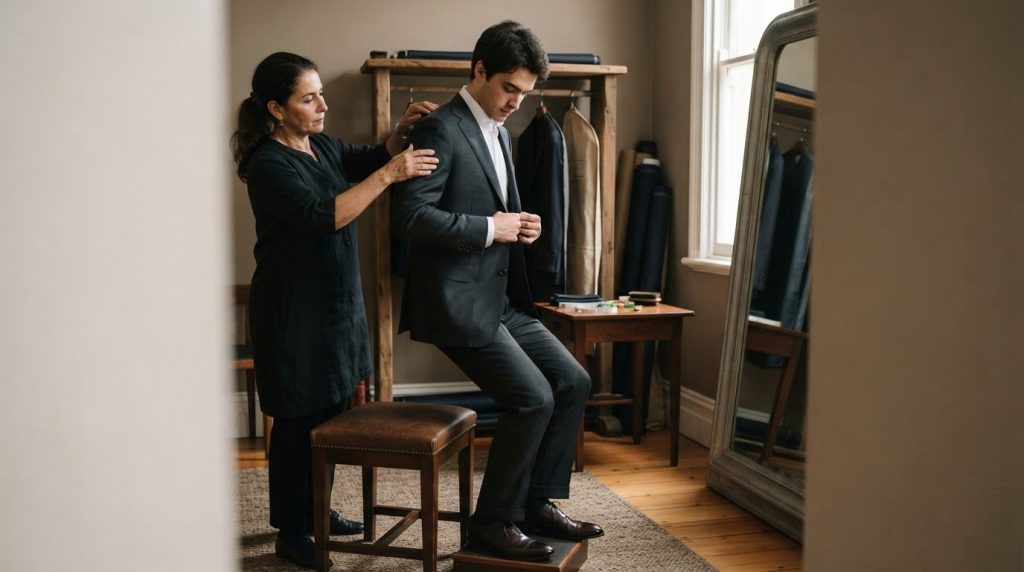
A suit can be well chosen and still feel wrong if the fit or finish distracts you. To get my suit ready for an interview in Melbourne, focus on how it sits when you move, whether any alterations are needed, and how it will be pressed and presented on the day.
It’s understandable to want more than a sharp appearance: comfort matters when you’re concentrating on the conversation. This article explains how measurements inform alterations, which details can be customised, and how delivery or showroom collection can fit into your preparation.
The Bancroft family’s history spans 4 generations since 1913, and Nick Bancroft is the fourth generation of the Bancroft family. Their purpose is caring for Melbourne’s best dressed and well known people, with a focus on Toorak, South Yarra and surrounding areas, and services suitable for all areas of Melbourne. You’ll also learn where the GreenEarth® Cleaning process fits into professional garment care.
Key Takeaways
- A professional fit assessment considers how the jacket and trousers sit when you move, helping identify where alterations may improve comfort and polish.
- Cleaning and alterations need different preparation, so the work involved and the interview date shape when to arrange your suit’s care.
- Decide whether delivery or showroom collection best suits your schedule, and allow room for a final fit and finish before the interview.
- Nick Bancroft, the fourth generation of the Bancroft family, carries a history spanning 4 generations since 1913, caring for Melbourne’s best dressed and well known people in Toorak, South Yarra and surrounding areas, with services suitable for all areas of Melbourne.
How does a professional prepare a suit for a job interview?
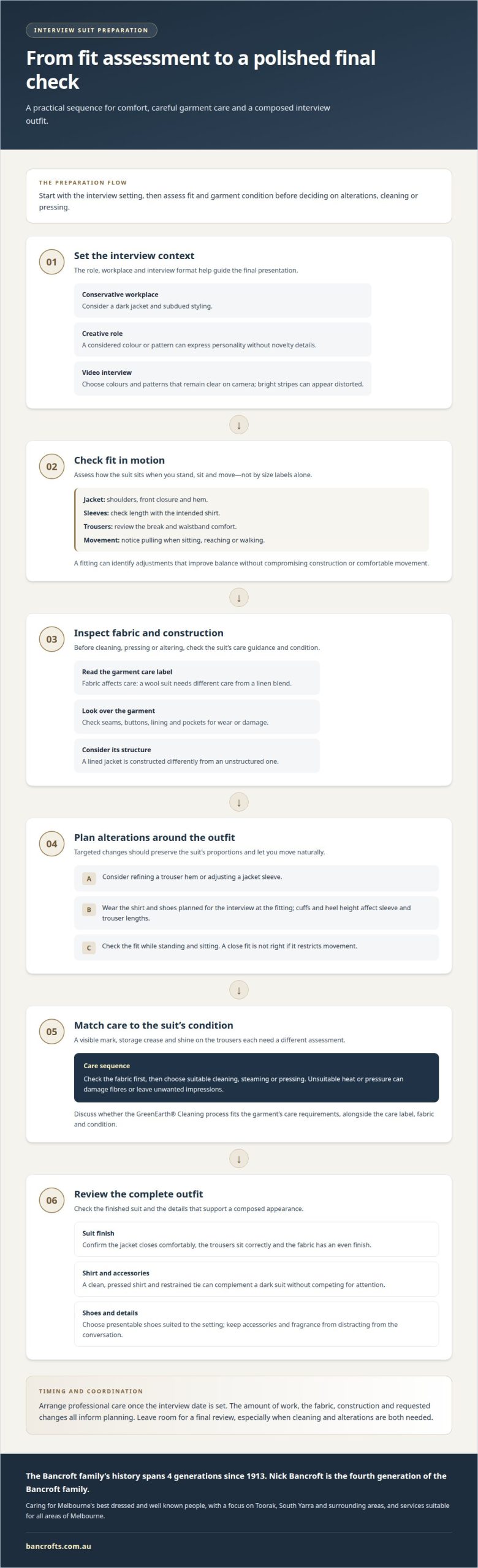
Start with the interview context and the suit’s condition. The role, organisation and interview format all influence the final presentation. A dark jacket can create a more conservative impression, while a creative workplace may allow restrained colour or pattern. Face-to-face, phone and video interviews call for different clothing considerations. Aim for a composed outfit that feels comfortable and supports your confidence.
Assess the jacket and trousers by how they fit, not by size labels alone. Check how the jacket sits at the shoulders, closes across the front and falls at the hem. Sleeve length, trouser break and waistband comfort also affect the overall line. Posture and movement matter: a jacket that pulls when you sit may distract during a panel interview. A fitting can identify alterations that improve balance without compromising the garment’s construction.
Consider the suit’s fabric, structure and existing details. A wool suit, for example, needs different care from a linen blend, and a lined jacket is constructed differently from an unstructured one. Check the garment care label for guidance. Before cleaning or pressing, inspect seams, buttons, lining and pockets for wear or damage. This helps protect the fabric and determine whether a requested adjustment is practical.
For a sharper interview finish, consider specific alterations, such as refining a trouser hem or adjusting a jacket sleeve. Changes should preserve the garment’s proportions and allow comfortable movement. A close-fitting result is not a good fit if you cannot sit, reach or walk naturally. At a fitting, wear the shirt and shoes intended for the interview, as they affect sleeve and trouser lengths.
Choose cleaning and pressing according to the suit’s condition and care requirements. A mark on the lapel, a crease from storage and shine on the trousers each need a different assessment. Pressing can restore a crisp appearance, but unsuitable heat or pressure can damage fibres or leave unwanted impressions. A professional checks the fabric before steaming or pressing, then finishes the jacket and trousers consistently.
Consider the shirt and accessories that complete the outfit. A clean, pressed shirt and a restrained tie can complement a dark suit without competing for attention. Novelty ties, noisy statement jewellery and strong perfume can distract from the conversation. Shoes should look presentable and suit the setting; scruffy trainers, slides and thongs undermine a formal outfit. Each choice should support your appearance, not become its focus.
- For an in-person interview: assess the suit in motion, then check the complete outfit with the intended shirt and shoes.
- For a video interview: choose colours and patterns that remain clear on camera; bright stripes can appear distorted.
- For a conservative workplace: consider a dark jacket and subdued styling.
- For a creative role: a considered colour or pattern can express personality without novelty details.
Interview preparation extends beyond your wardrobe. Review the position description, prepare examples of relevant skills and practise concise answers. Confirming the interview location, participants and materials to bring can also prevent last-minute disruption. While formal corporate positions require polished attire, career seekers pursuing skilled trade pathways—such as commercial licensing programs at Lone Star Truck Driving Academy—rely instead on practical certifications and technical readiness. Regardless of the field, a suit that fits properly and looks cared for supports your preparation, but it cannot replace considered answers or attentive listening.
A considered preparation includes inspecting the suit, assessing its fit, choosing appropriate garment care and reviewing the finished outfit. If you need to get your suit ready for an interview in Melbourne, distinguish simple pressing from preparation that accounts for fabric, construction, fit and interview setting. The suit should feel natural when you sit, stand and speak, keeping attention on your experience.
How far in advance should I book suit cleaning or alterations before an interview?
Arrange professional care as soon as your interview date is set. This allows time to assess, clean or alter the garment, then review it before you wear it. Cleaning involves a different process from a jacket adjustment, and combining both requires coordination. For example, a suit with a visible mark and a sleeve that needs shortening needs more planning than one that only requires pressing. Early planning makes it easier to organise each stage.
The amount of work matters as much as the calendar. A small trouser hem adjustment differs from reshaping a jacket, and a fresh mark needs assessment before cleaning begins. The fabric, construction, care label and requested change all inform the work. If the suit needs both cleaning and alterations, this assessment helps determine the order.
Tell the professional your interview date and whether it is in person or by video. That context helps define the required finish. A face-to-face panel interview may call for a full suit inspection, while a video interview still requires a clean jacket and presentable collar. Mention any other commitment for which you need the suit beforehand. These details help plan the final preparation around how you’ll wear it.
At the first fitting, bring the shirt and shoes you plan to wear. Their cuffs, collars and heel height affect how sleeves and trouser hems look. The professional can assess the suit while you stand and sit, then identify alterations that improve the line without restricting movement. If you change shoes after the fitting, the trouser break may look different. Keeping the outfit consistent helps avoid unnecessary adjustments.
Planning ahead also leaves time for a final review. The professional can check that the jacket closes comfortably, the trousers sit correctly and the fabric has an even finish. If the first fitting reveals a change in balance, a review gives you time to consider the result before interview day. Leaving the assessment until the last minute can limit the opportunity to complete both cleaning and alterations.
Use the interview date to organise the sequence:
- As soon as it is confirmed: arrange an assessment, especially if the suit needs both cleaning and alterations.
- At the fitting: bring the intended shirt and shoes, and explain the interview format.
- After the work: allow a final review of fit, finish and comfort before wearing the suit.
- Before the interview: keep the finished suit protected during travel and avoid wearing it for unrelated tasks.
These steps are useful whether the suit is new, stored between seasons or worn regularly. A stored wool suit may need checking for creases or marks, while frequently worn trousers may show shine or pressure lines. These conditions affect the care assessment, so choosing a date alone is not enough. Early planning helps match the process to the garment’s condition and your interview schedule.
If the interview is close, state the date at the outset and describe the work required. The professional can assess the suit and organise the appropriate care, rather than treating cleaning, alterations and pressing as interchangeable tasks. For professional interview suit preparation, provide the interview date and bring the complete outfit to the fitting. That gives the assessment a practical purpose: preparing a suit that looks considered and remains comfortable through the conversation.
Bancrofts Dry Cleaning
Bancrofts Dry Cleaning in South Yarra, Melbourne, prepares interview attire through professional dry cleaning and careful attention to fabric condition. Bring in your suit if marks, odours or storage creases affect its presentation. The GreenEarth® Cleaning process is eco-friendly, uses no hazardous chemicals and is non-toxic to the environment.
The Bancroft family’s history spans 4 generations since 1913. Nick Bancroft is the fourth generation of the Bancroft family, caring for Melbourne’s best dressed and well known people. Service is suitable for all areas of Melbourne, including Toorak, South Yarra and surrounding areas. If your shirt also needs professional preparation, Shirt Laundry can complete the outfit’s finish.
Contact Bancrofts Dry Cleaning to discuss preparing your suit for an interview.
Make room for a composed first impression
An interview outfit helps present your professional judgement before the conversation begins. Choose a finish that feels authentic to the role and lets you focus on what you want the interviewer to remember: your experience, perspective and interest in the work. For instance, automotive professionals operating across technical platforms like ModFilesMarket may rely on practical gear day to day, yet still benefit from tailored presentation when meeting prospective employers or business partners. A carefully prepared suit can support that impression without becoming its centrepiece.
If you’re planning to get your suit ready for an interview in Melbourne, use the remaining preparation time to consider the impression you want your clothing to convey. A measured, understated look may suit one workplace, while another may welcome a more individual expression. Let that intention guide your final choices, so your appearance feels coherent with the person you are presenting in the room.
For a considered next step, discuss your interview suit with Bancrofts Dry Cleaning. Approach the day with care in your presentation and confidence in your own preparation.
Frequently Asked Questions
Where can I get a suit dry-cleaned quickly in Melbourne CBD?
Bancrofts Dry Cleaning is not based in Melbourne CBD, so allow for travel to its premises when planning a drop-off. It provides professional suit dry cleaning; for an interview, share the event date and note any visible marks or garment concerns at intake. That gives the garment assessment useful context without assuming a CBD collection point.
How much does suit dry cleaning cost in Melbourne?
A suit’s care depends on its fabric, construction and condition. A wool jacket with a stain, for example, may need different handling from trousers that only need freshening. The care label and any delicate details also guide the process. An assessment helps determine suitable cleaning for the garment rather than treating every interview suit alike.
Which Melbourne dry cleaners offer same-day or express suit cleaning?
Bancrofts Dry Cleaning offers Same Day Service, subject to availability. If you drop off your clothes by 9 a.m., we will have them ready to wear after 4 p.m. the very same day, Monday through Saturday. This may suit a close interview date when cleaning is the main need; alterations require separate planning for fit.
Where can I get suit alterations or repairs done quickly in Melbourne?
Bancrofts Dry Cleaning offers Alterations and Repairs for fit adjustments and garment faults. A loose button or seam repair differs from changing trouser length or sleeve balance. Bring the complete suit and explain the adjustment you need and your interview date. The team can then assess the garment’s construction and the requested work.
