
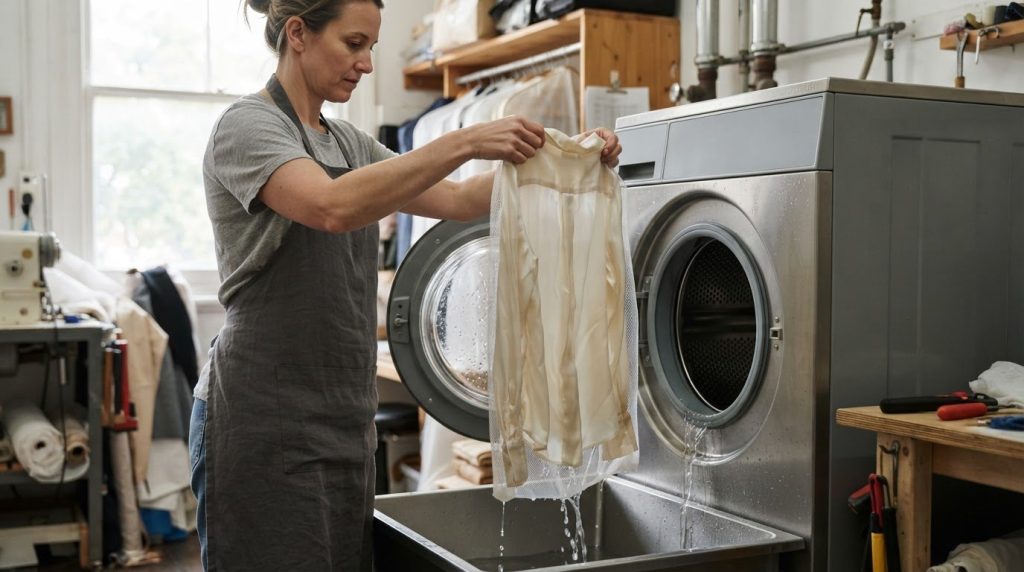
Wet cleaning is one alternative to solvent-based dry cleaning, but it is not literally chemical-free: it uses water and detergents to remove water-soluble soils and stains. For people searching for chemical-free dry cleaning for sensitive skin, the distinction matters. The cleaning method and any residue left on a garment may affect how it feels against the skin.
Skin sensitivities can make garment care feel uncertain, especially when a favourite piece needs professional attention. This article explains how wet cleaning differs from solvent-based methods and what to consider about cleaning residues, so you can make a more informed choice.
The Bancroft family’s history spans 4 generations since 1913. Nick Bancroft, the fourth generation of the Bancroft family, continues a tradition of caring for Melbourne’s best dressed and well known people, with a focus on Toorak, South Yarra and surrounding areas, as well as all areas of Melbourne.
Key Takeaways
- Wet cleaning uses water and mild detergents, so “chemical-free” isn’t a literal description of the process.
- Learn how wet cleaning and solvent-based methods differ in the soils and stains they address.
- Understand why cleaning residues may matter when a garment sits close to sensitive skin.
- See how professional fabric assessment helps guide care for delicate and treasured garments.
Health concerns from perc and petroleum-based solvents
Solvent choice matters because cleaning residues can remain on garments and may affect sensitive wearers. Perchloroethylene, also called perc or PCE, is one solvent used in commercial dry cleaning.
Exposure to Perchloroethylene
Perchloroethylene exposure means contact with this solvent through breathing vapour or contact with contaminated surfaces or clothing. The U.S. Environmental Protection Agency identifies PCE as a solvent used in commercial dry cleaning. PERC is described as a probable human carcinogen, and exposure has been associated with skin irritation and respiratory concerns. For a wearer, the practical issue is possible residue on a garment; for workers, handling and workplace exposure also matter. A gentle result depends on the cleaning method and the garment’s material, not simply the solvent’s name.
Wet Cleaning and PERC-Based Cleaning
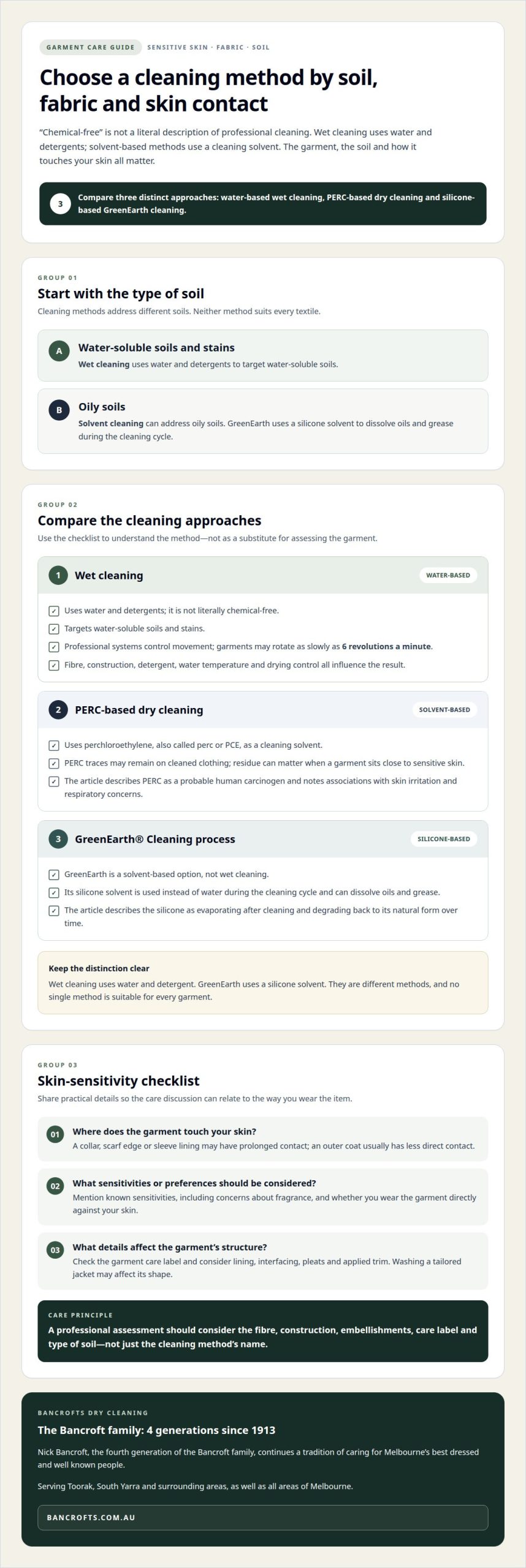
Wet cleaning uses water and detergents, while PERC-based dry cleaning uses a chemical solvent. The methods treat fibres and stains differently: wet cleaning targets water-soluble soils, while solvent cleaning can address oily soils. Neither method suits every textile, so the care label, construction and embellishments all matter when assessing a garment. For sensitive skin, it is also useful to know that PERC traces may remain on cleaned clothing. A method that avoids PERC can reduce exposure to that particular solvent, but “chemical-free” is not an accurate description of professional cleaning.
PERC-Free Solvent Options
PERC-free dry cleaning may use hydrocarbon or silicone-based solvents, such as GreenEarth. Wet cleaning uses water and detergent instead. Hydrocarbon solvents are described as less toxic than PERC, but less environmentally friendly than wet cleaning or carbon dioxide methods. Australian cleaners may use different solvents and detergents depending on their equipment and cleaning method. Australian consumer and workplace requirements are distinct from US state phase-out measures. For garment care, useful details include the method and solvent used; worker exposure also depends on the substance and how it is handled.
New Jersey committed to phasing out PERC by 2021, and California committed to phasing it out by 2023. These are US state measures, not Australian phase-out dates. Their relevance is comparative: they show that solvent choices and policy approaches can differ by location. In Australia, compare methods by their solvent, stain suitability and potential residue, especially when clothing sits close to sensitive skin.
Water-based wet cleaning and biodegradable detergents
Professional wet cleaning uses water, specialised machines and controlled movement to clean garments. Unlike traditional dry cleaning, it avoids solvent-based cleaning and uses detergents suited to water-soluble soils. In professional systems, garments may rotate as slowly as six revolutions a minute to help control mechanical action. This measured process matters for shaped or delicate pieces, where excess agitation can affect the finish, seams or structure. The fibre, construction and care label help determine the appropriate method.
Some wet-cleaning systems use plant-based and biodegradable detergents, though ingredients vary between products. Detergent needs to loosen soil and rinse cleanly from the textile; biodegradability alone does not show how a garment will respond. Wool and cotton, for example, have different fibre characteristics and may need different treatment. The machine, detergent dosage, water temperature and drying control all influence the result. That is why assessing the garment before cleaning matters.
GreenEarth is a silicone-based cleaning option, not wet cleaning. Its silicone solvent is used instead of water during the cleaning cycle and can dissolve oils and grease before evaporating after cleaning. GreenEarth silicone is also described as degrading back to its natural form over time. The distinction matters: when choosing between water-based and silicone-based cleaning, consider the fabric, soil type and care label, not just the term “eco-friendly”.
Wet cleaning and GreenEarth cleaning are different approaches, not universal solutions. Water-based detergents address water-soluble stains, while a silicone solvent addresses oily soils. Some plant-derived solvents can also dissolve grease, ink and oil, but they are not the same as biodegradable wet-cleaning detergents. For beadwork, embroidery or a structured jacket, the method needs to suit both the textile and its construction. No single method is suitable for every garment.
For fine clothing, the GreenEarth® Cleaning process offers a silicone-based alternative to water-based wet cleaning, with fabric assessment guiding the appropriate care.
Chemical residue and skin sensitivities
Skin comfort can depend on how you wear a garment, not just on its fibre. A collar, scarf edge or sleeve lining may rest against skin for a long time, while an outer coat usually has less direct contact. If you are looking for chemical-free dry cleaning for sensitive skin, describe how you wear the item and where discomfort occurs. That gives the care discussion a practical starting point without assuming a cause.
Your preferences can also guide the discussion. Mention known sensitivities, including concerns about fragrance, and whether you wear the garment directly against your skin. A silk blouse worn under a jacket, for example, has a different contact pattern from a coat worn over several layers. These details help keep the care advice relevant to your experience rather than relying on a general claim about a cleaning method.
Aftercare advice should take the garment’s structure into account. A professional can consider the care label alongside features such as lining, interfacing, pleats or applied trim. These details affect whether airing or laundering is appropriate. Washing a tailored jacket, for instance, may affect its shape, while a less structured garment may allow different care. Guidance should be specific to the item.
When discussing chemical-free dry cleaning for sensitive skin, ask for clear advice tailored to the garment and how you wear it. Airing is not a substitute for cleaning, and laundering should follow the care label. For a delicate or structured piece, the care approach should account for its construction rather than applying the same advice to every garment.
Keep the discussion focused on your needs and the garment’s intended use. Explain whether you wear it close to your skin, layer it or reserve it for occasional wear. That context helps make practical care considerations clear while taking comfort and the garment’s finish into account. Individual advice is more useful than a blanket assurance that one method suits every wearer with sensitive skin.
Are any dry-cleaning methods completely free of chemicals?
No. “Chemical-free” is not a literal description of professional garment cleaning: water, detergents, solvents and carbon dioxide are all chemical substances. The useful distinction is which cleaning agent a method uses, how it treats the fabric and whether residues may remain. For sensitive skin, the method and how the garment contacts your skin are more meaningful considerations than a claim of zero chemicals.
Wet cleaning uses water and detergents rather than a dry-cleaning solvent. Its controlled process may suit some garments, but detergent is still part of the cleaning system. The fibre, construction, care label and stain type help determine whether water-based treatment is appropriate. A delicate silk blouse and a structured jacket, for example, may need different assessments before cleaning.
GreenEarth cleaning uses a silicone-based solvent instead of water. It is an alternative to conventional solvent methods, not a chemical-free process. Liquid carbon dioxide cleaning is another option: garments are placed in a pressurised chamber containing liquid CO₂, with biodegradable detergents used in the process. Because CO₂ and detergent are substances used during cleaning, this method cannot accurately be called chemical-free either.
These distinctions lead to a more useful question: which method suits the garment and your concerns? A solvent’s name alone cannot establish that it will prevent sensitivity or suit every textile. Fabric composition, dye, finish, embellishments and soil type all influence the care decision. Water-soluble stains and oily marks, for example, may call for different treatments.
For treasured or delicate clothing, a professional assessment can weigh the care label, construction and preferred cleaning approach. Share any known skin sensitivity and explain where the garment touches your skin. To discuss a suitable method for your garment, request professional garment care.
Bancrofts Dry Cleaning
Bancrofts Dry Cleaning can help you consider garment construction, care instructions and skin sensitivities when selecting professional care. Its GreenEarth® Cleaning process offers a silicone-based alternative to PERC-based cleaning, though no professional method is literally chemical-free. Share the garment type and any known sensitivity so its care can be considered in context, particularly for delicate evening wear, bridal pieces or leather and suede.
The Bancroft family’s history spans 4 generations since 1913, with Nick Bancroft, the fourth generation of the Bancroft family, continuing its purpose of caring for Melbourne’s best dressed and well known people. Service is available in Toorak, South Yarra and surrounding areas, as well as all areas of Melbourne.
For considered garment care and guidance on the cleaning method, contact Bancrofts Dry Cleaning in South Yarra.
Choose garment care with confidence
Think beyond the next cleaning appointment. Planning future care is easier when you consider how often you wear a garment and what you hope to preserve, whether that is its silhouette, an heirloom detail or the finish of a favourite piece.
If you are considering chemical-free dry cleaning for sensitive skin, treat it as a personal care priority to discuss, not a promise that a process uses no substances. Your comfort and the garment’s future can both guide the conversation.
A thoughtful care plan can help treasured clothing remain part of your wardrobe for years to come. Contact Bancrofts Dry Cleaning to discuss a garment and its care.
With considered care, each piece can continue its story with you.
Frequently Asked Questions
What Is Wet Cleaning?
Wet cleaning is a professional garment-care method that uses water instead of a dry-cleaning solvent. Whether it suits an item depends on more than its fibre: the care instructions, construction and finish matter too. A lined skirt, for example, may need different consideration from an unlined one. Assessment helps preserve the garment’s intended shape and appearance.
Are Your Clothes Full of Perc?
No. A garment’s cleaning history depends on the method used for that particular item, and its appearance cannot reveal whether PERC was involved. Care labels give instructions for future treatment, not a dependable record of previous cleaning. If you are concerned about a specific piece, its cleaning history is more informative than assuming every garment received the same treatment.
Is wet cleaning safe for delicate fabrics?
Wet cleaning may be appropriate for some delicate pieces, but the fabric category alone cannot determine suitability. The garment’s finish, seams, lining and shape all matter. A pleated item, for example, needs its structure considered alongside its fibre. An assessment should weigh these details against the care instructions before selecting a process, rather than treating all delicate garments alike.
What is professional wet cleaning, and is it suitable for sensitive skin?
Professional wet cleaning uses water under controlled conditions. Whether it suits someone with sensitive skin cannot be judged from the method’s name alone. Sensitivities differ, and the garment itself may have finishes or trims that affect its care. Sharing the item’s intended use and any known concerns helps make the assessment relevant.
Can dry-cleaning residues or fragrances trigger skin irritation or allergies?
Yes, some people may experience irritation or an allergic response after contact with residues or fragrances. That response does not identify its cause on its own. If symptoms recur, note which garment you wore and when the discomfort appeared, then discuss the pattern with a health professional. Keeping a record can help distinguish a possible garment-related trigger from other exposures.
How can I find a dry cleaner that accommodates eczema, allergies, or chemical sensitivities?
Choose a garment-care discussion that addresses your specific sensitivity and the item’s needs, rather than relying on a broad “gentle” claim. At Bancrofts Dry Cleaning in South Yarra, describe any known triggers, how you wear the garment and its care-label instructions. This gives the team useful context for discussing its care. For eczema or recurring reactions, keep your healthcare professional informed as well.
