
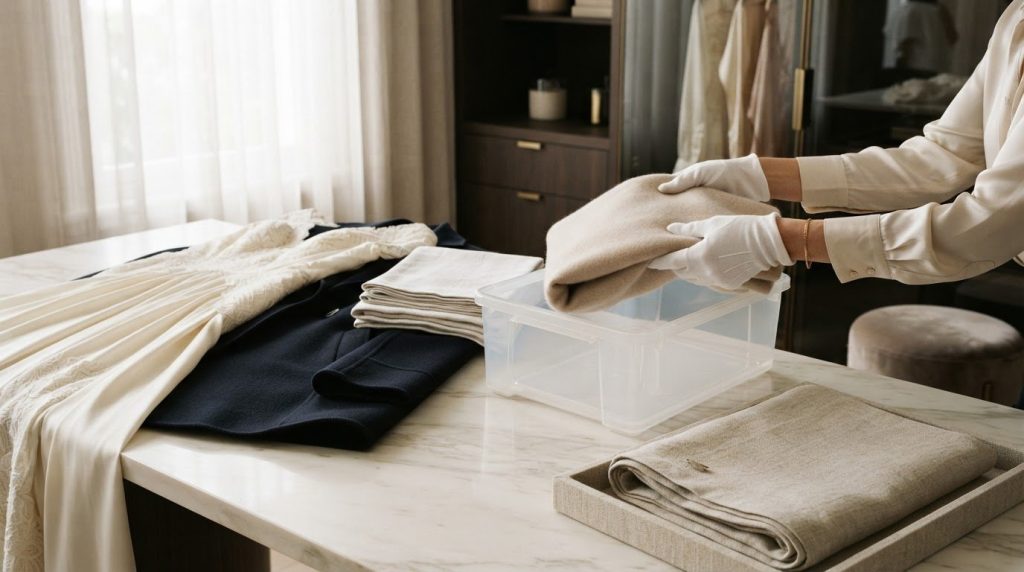
A hot wash can kill clothes moths at every life stage when washable garments and blankets can safely withstand 50°C or higher for 30 minutes. For delicate or valuable pieces that shouldn’t be washed, dry cleaning for moth infestation can address eggs and larvae without relying on a home wash.
It’s understandable to want to clean moth-damaged fabrics quickly, but cleaning is only one part of reducing reinfestation risk. This guide explains how to choose a suitable cleaning method, contain affected garments and store fabrics after treatment, alongside practical steps to make wardrobes and storage areas less inviting to moths.
At Bancrofts Dry Cleaning, Nick Bancroft, the fourth generation of the Bancroft family, continues a history spanning 4 generations since 1913, caring for Melbourne’s best dressed and well known people. From South Yarra to Toorak, South Yarra and surrounding areas, and all areas of Melbourne, the GreenEarth® Cleaning process supports considered care for fine garments whose quality and history deserve to be preserved.
Key Takeaways
- A washable fabric may be treated with a hot wash at 50°C or higher for 30 minutes, but only if its care instructions allow it.
- For delicate or valuable garments, choose a cleaning method suited to the fabric and construction rather than risking damage with heat or water.
- Before storing treated pieces, ensure they’re clean and completely dry, then use sealed storage to help limit access for moths.
- For cherished garments needing specialist care, Bancrofts Dry Cleaning uses the GreenEarth® Cleaning process; Nick Bancroft, the fourth generation of the Bancroft family, continues a history spanning 4 generations since 1913, caring for Melbourne’s best dressed and well known people in Toorak, South Yarra and surrounding areas, and all areas of Melbourne.
Does Washing Clothes Kill Clothes Moth Larvae?
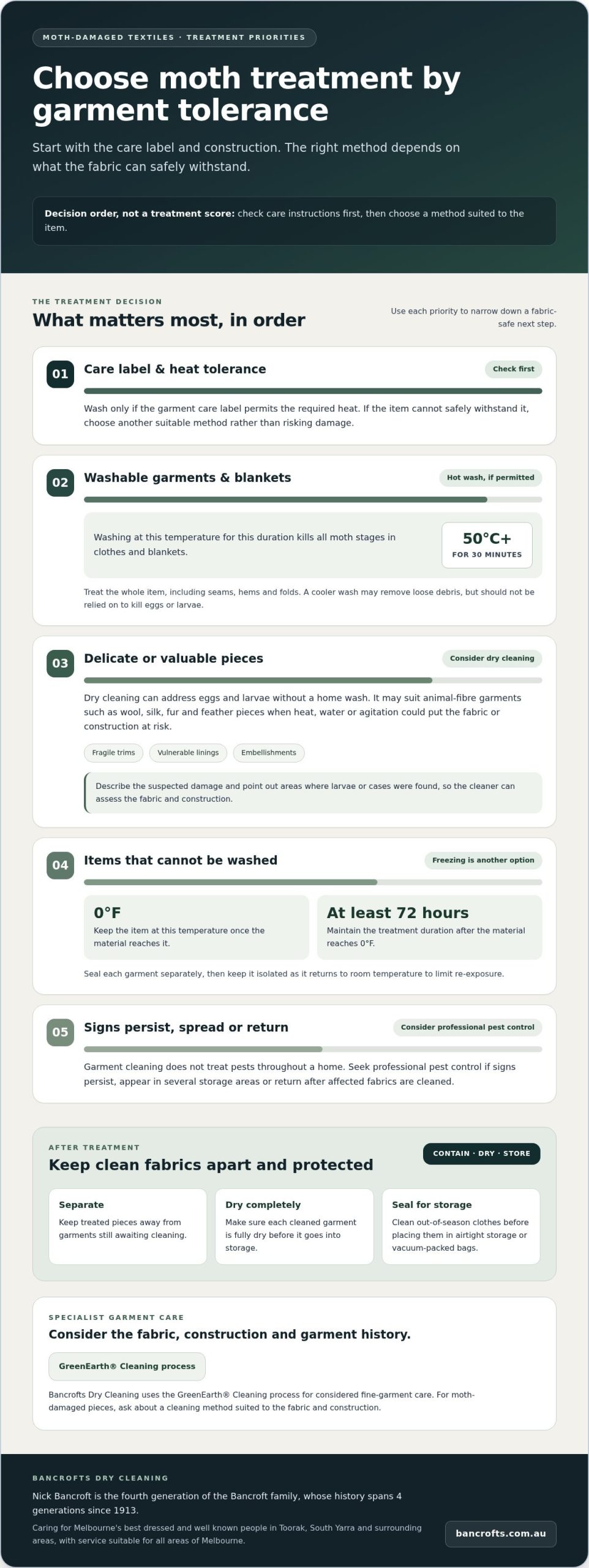
- Wash only when the garment care label permits the required heat. Washing or dry cleaning at 50°C or higher for 30 minutes kills all moth stages in clothes and blankets. A cooler wash may remove loose debris, but shouldn’t be relied on to kill eggs or larvae. Treat the whole washable item, including seams, hems and folds.
- Inspect affected garments before washing, especially wool, silk, feathers and felt. Clothes moth larvae feed on animal fibres; cotton and synthetics are less commonly attacked unless they are blended with wool or soiled. Check pockets, seams and linings, and keep affected items separate from clean clothes while handling them.
- Look for signs of the two clothes moth species that damage textiles. Webbing clothes moth larvae feed beneath silken webbing; casemaking moth larvae carry a silk case while feeding and pupating. Adult moths don’t eat fabric, but their presence can signal an infestation. Cleaning needs to address the garment, not just visible adults.
- For valuable or delicate pieces, dry cleaning for moth infestation can treat eggs and larvae without a home wash. Prioritise animal-fibre garments, including wool, silk, fur and feather pieces, when their care labels or construction make hot-water washing unsuitable. This approach can help preserve garments whose embellishments or linings are vulnerable to heat and agitation.
- Freezing is another option for garments that can’t be washed. Keep items at 0°F for at least 72 hours once the material reaches that temperature. Seal each garment separately, then keep it isolated as it returns to room temperature to limit re-exposure.
- A dry cleaner can clean garments, but garment cleaning does not treat pests throughout a home. When arranging dry cleaning for moth infestation, describe the suspected damage and ask about a cleaning method suited to the fabric and construction. Point out fragile trims and areas where larvae or cases were found.
- Seek professional pest control if signs persist, appear in several storage areas or return after affected fabrics are cleaned. Garment cleaning alone may not resolve a wider infestation; locating its source is essential for lasting control. In comprehensive property care, addressing outdoor conditions such as overhanging branches that harbor pests or bridge access to the roofline is also important, with specialists like Prime Tree Services offering expert arborist solutions to keep property grounds properly maintained.
Cleaning and storing fabrics
- Separate treated pieces from garments still awaiting cleaning. Place each item in a clearly separated area, rather than returning it to the wardrobe beside untreated wool or silk. This simple sequence helps contain any insects displaced during sorting and keeps clean fabric apart from possible sources of moth larvae.
- Air recently worn garments outside the wardrobe for 24-48 hours before putting them away. Check cuffs, collars, pockets and seams for lint, hair or food residue, which can attract clothes moths. Brush removable debris away from the fabric, then clean the storage space with a vacuum, including shelf edges and drawer corners.
- Make sure each cleaned garment is fully dry before storing it. Moisture trapped in folds or linings can affect fabric condition, so open jackets and turn out pockets while they air. Preserve expensive pieces on suitable hangers; fold knitwear carefully to avoid stretching the shoulders or distorting delicate fibres.
- Clean out-of-season clothes before storing them, then contain them in airtight storage or vacuum-packed bags. Choose a clean, dry container and leave enough room to inspect each garment without disturbing the rest. A garment bag protects an individual piece from dust, but it must be clean and should not contain an untreated item alongside clean clothes.
- Keep a simple record of stored pieces, such as “wool coat, cleaned, winter storage”. When retrieving a garment, inspect its seams and folds before wearing it or returning it to the wardrobe. If delicate construction, embellishment or a valuable lining makes home treatment unsuitable, consider professional garment care as part of the cleaning stage.
Packing and containment instructions
- How should you prepare and transport clothes to a dry cleaner after moth damage? Place each affected garment in a clean plastic bag, seal it and carry it separately from untreated clothes. Tell the cleaner which areas show damage and whether you found larvae, eggs or cases.
- Before bagging, inspect the garment over a clear surface that you can clean afterwards. Check seams, cuffs, pockets and folds, where fibres can conceal eggs or feeding debris. Avoid shaking or brushing the item indoors, as this can dislodge material onto nearby clothes or closet shelves.
- Keep damaged garments apart from clean pieces throughout the journey. Use a separate bag for each item instead of placing several garments together, and keep the sealed bags away from shopping and household textiles. This separation helps contain loose larvae and reduces the chance of transferring them between fabrics.
- Take the bag directly to the cleaner and explain the suspected infestation before opening it. Mention the fabric, such as wool, silk or a blend, and point out fragile trims, linings or repairs. These details help the cleaner assess the garment’s construction and choose an appropriate process with minimal handling.
- After handing over affected clothing, don’t return other garments to the same closet until you’ve inspected and cleaned its shelves, corners and floor. Vacuum lint, hairs and debris, then empty the vacuum away from stored textiles. Keep clean garments away from the empty transport bags, and discard used bags securely.
- For a valuable coat or delicate evening piece, preserve its shape while containing it. Support structured shoulders and avoid compressing beadwork, feathers or fragile fibres under other items. Keep the bag out of direct heat during transport; once treatment is complete, return the garment to storage only after its fabric is dry and the closet is clean.
Preventing reinfestation
- Find the source before returning cleaned garments to storage. Check dark, undisturbed places, including closet corners, folded cashmere, wool rugs and upholstered furniture. Clothes moth larvae feed on animal fibres, and webbing clothes moths can leave silken trails where larvae have fed. Inspect nearby items as well as the garment with visible damage.
- Vacuum shelves, drawer joints, carpet edges and wardrobe crevices to remove lint, hairs and debris. Pay particular attention to hidden corners where larvae or eggs may be sheltered. Empty the vacuum away from stored fabrics, then wipe the storage area and let it dry before putting clean garments inside.
- Reduce the dark, undisturbed conditions clothes moths favour. Keep wardrobe doors open while organising garments, and periodically air stored pieces in a clean, suitable space. Move folded knits and coats during inspections; regular handling makes webbing, feeding marks and new damage easier to spot.
- Empty dirty laundry baskets regularly. Worn clothes can carry body oils, food marks or lint, so don’t let them accumulate beside clean wool or cashmere. Air recently worn garments outside the closet before storing them, and keep clean pieces separate from laundry until they have been cleaned and dried.
- Are mothballs or moth sprays safe to use on clothing in Australia? Follow the product label, and use a moth-control product on garments only if its directions explicitly allow it. Don’t spray delicate fibres such as silk or cashmere without label instructions; keep treated items separate from untreated clothing as directed.
- After cleaning, inspect the closet and stored garments, especially where webbing or larvae appeared. If fresh damage returns, search adjoining storage spaces and household textiles rather than treating only the same jumper again. Cleaning clothing alone may not resolve an infestation if its source remains elsewhere in the home. More broadly, keeping up with general home maintenance—such as ensuring window fittings and seals are secure through specialists like A ACME Design—is another practical step in protecting domestic spaces from external elements.
Bancrofts Dry Cleaning: Dry Cleaning
Bancrofts Dry Cleaning in South Yarra, Melbourne, cleans moth-affected garments that need careful treatment rather than a home wash. Describe where you found damage and identify delicate fibres, linings or embellishments to help guide care for a wool coat, silk piece or treasured evening garment. Cleaning treats the garment; locating and addressing the infestation’s source remains part of home prevention.
The GreenEarth® Cleaning process offers an eco-friendly approach that uses no hazardous chemicals and is non-toxic to the environment. Nick Bancroft, the fourth generation of the Bancroft family, continues a history spanning 4 generations since 1913, caring for Melbourne’s best dressed and well known people. Bancrofts serves Toorak, South Yarra and surrounding areas, as well as all areas of Melbourne.
For careful cleaning of a moth-affected garment in South Yarra, contact Bancrofts Dry Cleaning or visit bancrofts.com.au.
Give treasured fabrics a considered next step
Keep a simple care record for each valued piece. Note its maker or provenance, fibre content, construction details and any previous alterations or repairs. These observations can guide future decisions, especially for vintage garments whose original materials and workmanship are part of their significance.
When arranging dry cleaning for moth infestation, share your care record and describe what you observed and any treatment already attempted. This helps ensure the garment’s condition is considered as a whole. A thoughtful approach treats a garment not as disposable, but as a work of craft with a history worth preserving.
Contact Bancrofts Dry Cleaning to discuss care for a garment you value. A thoughtful record and a considered next step can help you look after the pieces you hope to wear and treasure for years to come.
Frequently Asked Questions
How do you know if you have a clothes moth infestation?
Several affected items in the same storage area suggest a possible infestation more strongly than one isolated hole. Look for tiny cases or silk-like traces near damaged fabric, then inspect garments stored beside it. A single adult moth is not conclusive; compare nearby woollens and note whether fresh signs appear after cleaning.
Why do moths eat clothes?
Clothes moth larvae feed on animal-derived fibres, making garments such as wool coats and cashmere knitwear potential food sources. Adult moths lay eggs in sheltered places where suitable fabric is stored, giving larvae access to it after hatching. Food marks and body oils can also make blended and otherwise less-attractive fabrics more vulnerable.
Does dry cleaning kill clothes moth eggs, larvae, and adult moths?
Dry cleaning kills eggs and larvae present on the garment being treated. It does not address moths or their source elsewhere in the home, so cleaning a coat alone cannot resolve a wider household problem. If you see adult moths, treat that as a reason to inspect nearby storage and household textiles, not as proof that every garment is infested.
Can washing, hot tumble drying, or freezing kill clothes moths as alternatives to dry cleaning?
Washing, tumble-dryer heat and freezing may be alternatives if the garment can safely withstand the treatment and the required conditions reach the whole item. Check the care label before applying heat or water, especially for lined or embellished pieces. A dryer cycle suitable for everyday cotton may be unsuitable for a structured wool jacket.
How should wardrobes and stored clothing be treated to prevent moths returning?
Keep a brief storage inventory noting which pieces have been treated and where they are kept. This helps prevent untreated items from being mixed with clean ones and makes it easier to trace fresh damage to a particular area. When seasonal clothes come back into use, review the inventory and inspect pieces that remained undisturbed.
How can I tell clothes moth damage from other fabric damage?
Examine the yarns at the damaged edge in good light. Moth feeding can leave fibres missing, while a snag often pulls or distorts the threads that remain. Compare the mark with the garment’s construction: damage beside a zip, buckle or bag strap may point to contact or friction. For a valuable vintage piece, document the area before repair.
