
A small home-care decision can leave a lasting mark on a designer garment. The safest way to avoid ruining designer clothes isn’t to attempt every stain or crease yourself. It’s to recognise when home care could put delicate fabric, colour, shape or embellishments at risk.
It’s understandable to hesitate over a care label, a steamer or a mark on a favourite piece. This guide explains how to protect garments during wear, cleaning and storage, how to read care instructions in context, and when to stop home treatment and seek specialist advice.
We’ll cover practical precautions and warning signs that call for a more considered approach. Bancrofts Dry Cleaning in South Yarra provides specialist care for high-fashion, bridal and evening garments using the GreenEarth® Cleaning process. The family-owned business has cared for garments since 1913 and is now in its fifth generation, with services including dry cleaning, alterations and repairs, and wedding gown cleaning and restoration.
Key Takeaways
- To avoid ruining designer clothes, pause before washing, steaming or treating a stain, and consider the garment’s condition and construction.
- Read the garment care label first, but remember it may not account for every detail or existing concern.
- For stains, avoid rubbing and applying household remedies or heat unless the label or a qualified professional supports it.
- Share the care label, stain history and any previous treatment when seeking specialist garment care, including Bancrofts’ GreenEarth® Cleaning process in South Yarra.
- Bancrofts Dry Cleaning is a family-owned garment-care business in South Yarra, serving customers across Melbourne with specialist garment care and other services.
How designer clothes get ruined: prevent damage before it starts
One rushed wash, improvised stain treatment or hot iron can put a valued garment at risk. But not every designer piece is unusually delicate, and professional cleaning isn’t necessary for every item. To avoid ruining designer clothes, base each decision on the whole garment: its fabric, construction, colour, trims and care label.
Good garment care means preserving a piece through wear, cleaning and storage. Small habits matter. Washing an item more often than needed adds handling, while a crowded wardrobe can crease clothes or press trims against neighbouring pieces. Repeated friction may affect fabric or surface details, and direct heat may not suit every garment. Choose care for the individual item rather than relying on a method that worked for something similar.
Which everyday habits create avoidable garment damage?
Pause before treating even a small mark. Rubbing or applying an untested product may spread it, disturb the surface or leave a new mark. Check the label first and note what caused the stain, if known. If care symbols are unfamiliar, consult a guide to laundry care symbols, but don’t treat a symbol as a full assessment of the garment’s condition.
Ordinary creasing or signs of regular wear don’t automatically call for specialist attention. A change in shape, stressed seams, unexpected colour transfer or a stain that remains after label-directed care is a reason to stop and assess before trying another remedy.
Why designer construction needs a closer look
The visible outer fabric is only part of a garment. Linings, carefully finished seams, applied trims and mixed materials may respond differently to moisture, heat or cleaning. For example, a dress might combine a fabric shell with a lining and decorative details, each affecting the safest care choice. This doesn’t mean every designer garment is fragile or must be dry cleaned.
Inspect the whole piece, including the inside, closures, seams and embellishments. Consider its existing condition alongside the label. Bancrofts Dry Cleaning in South Yarra offers specialist high-fashion garment care using the GreenEarth® Cleaning process, as well as bridal and evening wear care.
Read the garment care label before washing or steaming designer clothes
The garment care label gives instructions for washing, drying and ironing a piece. Read it before choosing a cleaning or pressing method, even if you’ve cared for a similar garment before. Symbols and wording offer essential guidance, but may not describe every construction detail or the garment’s present condition.
The label is a starting point; the garment’s full construction informs its care. To avoid ruining designer clothes, consider the label alongside the item itself. If instructions are missing, unclear or seem difficult to reconcile with prominent embellishment or mixed materials, pause rather than guess.
What should you check on a designer garment label?
Look for fibre information and the stated instructions for washing, drying and ironing. Then inspect the full garment before acting:
- Check the lining as well as the outer fabric.
- Look at trims, fastenings and decorative details.
- Notice areas that show wear, changes in shape or signs of previous treatment.
Unfamiliar symbols are a reason to seek clarification, not to test a method on a valued piece. A label can guide routine care, but it may not explain how each component will respond to moisture, heat or pressure.
When should you avoid home washing or steaming?
Take extra care if the garment has unfamiliar trims, a surface finish or construction you can’t confidently assess. Moisture and heat may affect different components in different ways, while pressure from an iron or steamer can alter the appearance of some details. Don’t steam close to an unfamiliar trim or finish, and don’t proceed if you can’t interpret the label’s instructions.
Stop if you notice colour transfer, distortion or a change in texture. Don’t continue with a second method in the hope of reversing the first. Seek advice from a garment-care professional and explain what you observed.
Bancrofts provides specialist care for high-fashion garments in South Yarra and uses the GreenEarth® Cleaning process. If the label leaves you uncertain, consider specialist garment care before trying a home treatment.
Home care or professional cleaning: choose the safer option for each garment
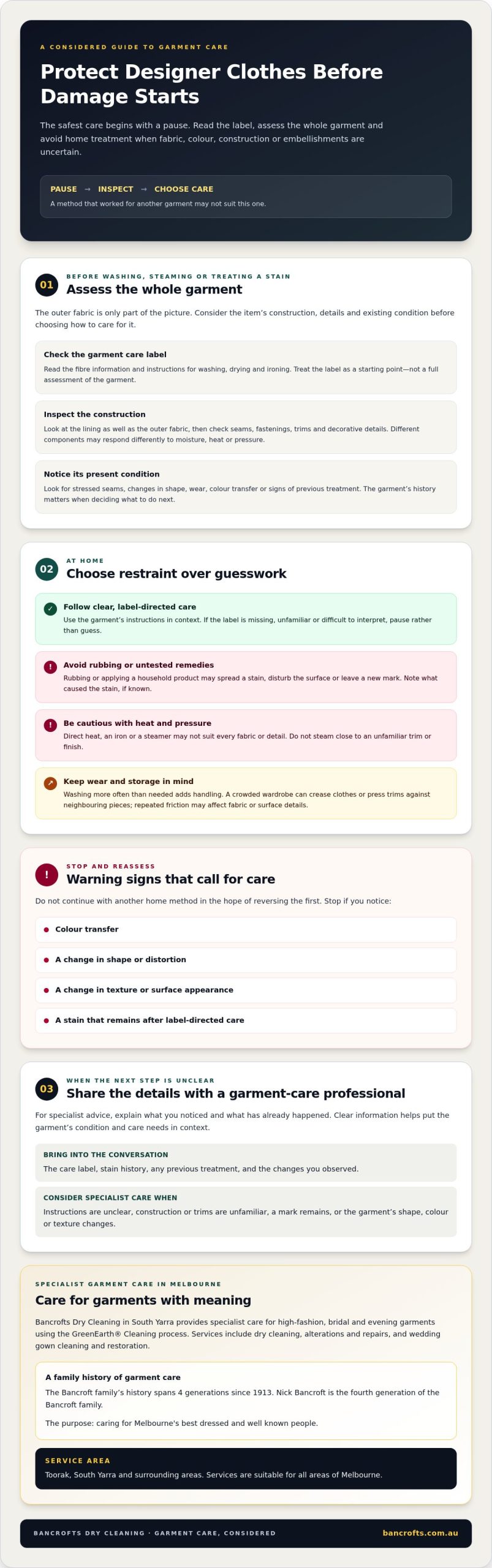
There isn’t one right care method for every designer garment. The safer choice depends on the care label, the item’s current condition, its construction and the concern you’re addressing. A well-maintained piece may need no more than airing between wears, while a mark, damaged seam or uncertain instruction may call for a closer assessment. This distinction can help you avoid ruining designer clothes without treating every item as too delicate for home care.
| Care option | Consider it when | Pause if |
|---|---|---|
| Routine airing | The garment has been worn but doesn’t need cleaning, and airing is suitable for its material and condition. | There’s a stain, lingering concern or a need to use heat or moisture to freshen it. |
| Label-directed home care | The label gives clear instructions and the garment appears sound, with no unusual construction or visible damage. | Instructions are unclear, components may need different treatment, or a previous attempt has changed the garment. |
| Specialist assessment | Care instructions are uncertain, construction or detailing is complex, or the garment has a stain or visible damage. | Don’t start an additional home treatment while you’re unsure what caused the issue or how the garment may respond. |
Which designer clothes may suit careful routine home care?
If the care label permits it and the garment is in sound condition, follow those instructions closely. Well-crafted contemporary staples—such as understated luxury pieces from Zoe Kratzmann—are designed to balance style and functionality, yet they still benefit from mindful upkeep. Between wears, airing may be sufficient. Store the piece to avoid crowding, creasing and contact with items that could catch or abrade it. If you notice odour, dampness or a change in the garment, check whether its storage conditions are suitable. General advice about a fibre or fabric isn’t permission to disregard the garment’s own label.
When is specialist garment assessment the prudent choice?
Pause before treating complex construction, applied detailing, unclear care instructions or visible damage. A professional can assess the garment’s condition and construction before deciding on a cleaning approach; that assessment doesn’t promise a particular result. For background on choosing specialist care, readers can consult a guide to couture dry cleaners in Australia or a South Yarra dry cleaning guide. No guide replaces an assessment of the individual piece.
Bancrofts Dry Cleaning in South Yarra provides specialist care for high-fashion garments using the GreenEarth® Cleaning process. Its services also include bridal and evening wear cleaning, alterations and repairs, and wedding gown cleaning and restoration.
How to handle stains, storage, and garment care without making damage worse
A stain can invite an immediate fix, but the wrong response may leave a more lasting mark than the original spill. A measured first step helps you avoid ruining designer clothes: pause, check the garment and its instructions, and don’t apply products or heat until you know they’re suitable.
What should you do when a designer garment is stained?
Use this sequence before attempting any treatment:
- Stop. Avoid rubbing, scrubbing or adding water while you assess the garment.
- Check the garment care label. Consider its instructions alongside the fabric, construction and any trims.
- Don’t apply an untested product. Avoid bleach, household remedies and heat unless the label or a qualified professional supports their use.
- Note the stain. Record what caused it, when it happened and anything you’ve already tried. This gives a garment-care professional useful context.
- Seek advice if uncertain. Ask a specialist about an unfamiliar stain, visible change or piece with complex detailing rather than trying another treatment.
Even a familiar substance can behave differently on different fabrics or finishes. If you’ve already used a product, share what it was and where it was applied. Don’t try to conceal the treatment with another.
How can you store designer clothes between wears?
Choose clean, dry storage and leave enough room for garments to avoid unnecessary compression, creasing and friction. Follow garment-specific guidance on whether a piece should be hung or folded and how it should be protected. Don’t assume one storage method suits every fabric or construction. If the garment has an unusual structure or particular sentimental value, seek advice before changing how you store it.
Thoughtful handling between wears is part of preservation. Keep an eye out for changes in shape, texture or condition, and reassess your approach if you notice them.
For help with a high-fashion, bridal or evening garment, Bancrofts Dry Cleaning in South Yarra offers specialist care using the GreenEarth® Cleaning process. Ask Bancrofts about specialist garment care.
When expert garment care helps preserve designer clothes
Home care has its place, but unclear instructions, visible damage or elaborate construction are reasons to pause. A specialist assessment can help you understand the garment’s condition and discuss an appropriate care approach before any treatment begins. That considered step can help you avoid ruining designer clothes through a well-intentioned but unsuitable attempt.
What happens when you ask a specialist to assess a garment?
Share the details that may affect the assessment, including:
- The garment care label: Explain which instructions are clear and which are uncertain, or show the label if you can.
- Fabric and construction concerns: Point out linings, trims, fastenings, embellishments or areas that appear worn or distorted.
- Stain history: Describe what caused the mark, when you noticed it and where it is on the garment.
- Previous treatment: Name any products or methods already tried, even if they didn’t appear to change the fabric.
This information gives the professional context to consider the garment as a whole. The suitable process depends on its materials, construction, present condition and care instructions; an assessment isn’t a promise of a particular outcome. For additional context, consult a guide to couture dry cleaners in Australia when considering specialist garment care.
How Bancrofts approaches the care of valued garments
Bancrofts provides specialist care for high-fashion, bridal and evening garments, using the GreenEarth® Cleaning process as part of its garment-care offering. Each piece has its own history and character, so careful preservation begins with understanding the garment rather than assuming one cleaning method suits all.
Based in South Yarra, Bancrofts Dry Cleaning also offers wedding gown cleaning and restoration, leather and suede cleaning, alterations and repairs, and household textile cleaning. Collection and delivery services are available across the Melbourne metropolitan area.
If you’re uncertain about a valued garment, share its label details, condition and treatment history before deciding on the next step. Speak with Bancrofts about caring for your garment.
Protect the pieces you value with considered care
To avoid ruining designer clothes, let the garment guide each decision. Read its care label, consider its construction and condition, and resist rushing into stain treatments or heat when the safest approach is uncertain. Routine airing and careful storage can help between wears, while complex detailing, unclear instructions or visible changes are reasons to seek an expert assessment.
Bancrofts Dry Cleaning is a family-owned business in South Yarra, caring for garments since 1913 and now operating in its fifth generation. Its specialist services include high-fashion, bridal and evening wear care using the GreenEarth® Cleaning process.
For considered guidance on a valued garment, speak with Bancrofts about caring for your garment.
Frequently Asked Questions
Can I wash designer clothes at home?
Yes, but only if the garment care label supports the method and the garment’s condition makes it suitable. Before washing, inspect the whole piece, including its lining, trims and fastenings. A clear instruction may not account for every construction detail or existing concern. If the label is missing or unclear, or the garment has complex construction, pause and seek professional advice rather than testing a new method on a valued piece.
How do I remove a stain from designer clothes without ruining them?
First, check the garment care label and identify the stain before attempting treatment. Don’t rub, scrub or apply a household product, as an untested treatment may affect the fabric or finish. Note what caused the stain, when it happened and whether anything has already been applied. Avoid heat until you have suitable guidance. If the stain, material or surface finish is uncertain, seek specialist advice before trying another method.
Can steaming ruin designer clothes?
Yes, steaming may cause problems if heat or moisture isn’t suitable for the fabric, finish or applied detailing. Check the garment care label before steaming, and avoid placing a steamer close to unfamiliar trims or complex construction. If you can’t confirm that steaming is appropriate, don’t experiment on a valued garment. Ask a garment-care professional to assess it and advise on a suitable next step.
How often should designer clothes be dry cleaned?
There’s no single schedule that suits every designer garment. Follow the care label and consider how often the piece has been worn, whether it has visible marks and what its construction requires. Avoid cleaning by habit alone, as unnecessary treatment may not be appropriate for the garment. If instructions are unclear or you’re concerned about its condition, ask a specialist to assess it before deciding on dry cleaning.
What should I do if a designer garment has no care label?
Don’t assume a familiar-looking fabric can be treated like another garment. Inspect the piece for a lining, trims, embellishments or mixed materials, but avoid washing, steaming or treating a stain until you have suitable guidance. The garment’s construction and current condition both matter. A specialist can assess these details before recommending a care approach, helping you avoid guesswork with a piece that may hold personal or investment value.
How should I store designer clothes between wears?
Start with the garment care label and choose a clean, dry place where the item won’t be crowded or exposed to avoidable friction. Follow garment-specific advice on hanging or folding, since construction can affect which option is suitable. Don’t assume one storage method works for every piece. If the garment has an unusual structure, delicate detailing or sentimental value, seek tailored guidance before changing how you store it.
When should I take designer clothes to a professional cleaner?
Seek professional advice if care instructions are unclear, a stain is uncertain, home treatment has changed the fabric, or the garment has complex construction or detailing. Explain what caused the concern and what steps you’ve already taken. Bancrofts Dry Cleaning in South Yarra provides specialist high-fashion garment care using the GreenEarth® Cleaning process, as well as bridal and evening wear care.
