
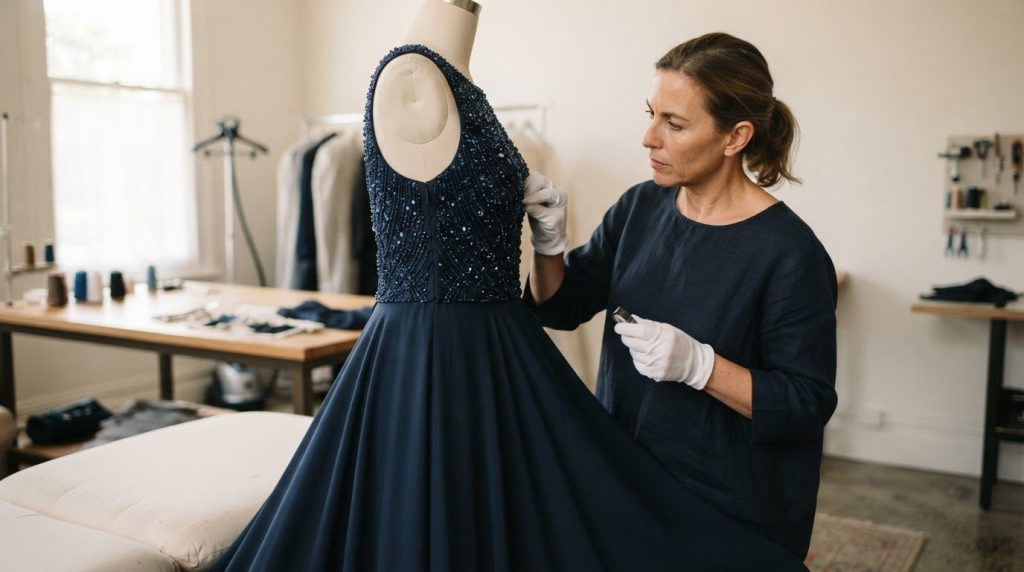
A couture label can make a garment more vulnerable to routine cleaning, not less. Understanding what couture-certified dry cleaning means starts with the care behind the label: assessing fabric, construction and embellishments, then choosing a suitable treatment and finish. The aim is to address soil and stains while preserving the shape and details that give a valued piece its character.
That care matters whether the garment is a silk gown, a tailored suit or a treasured vintage piece. This guide explains how delicate garments are assessed and treated, and what to look for when evaluating a couture cleaner. It also introduces the GreenEarth cleaning process and the Bancroft family’s four generations of experience since 1913. With Nick Bancroft, the fourth generation of the Bancroft family, the heritage continues in caring for Melbourne’s best dressed and well known people, from Toorak, South Yarra and surrounding areas to all areas of Melbourne.
Key Takeaways
- Assess a couture garment by its fabric, construction, embellishments and care label; these details guide the cleaning and finishing approach.
- Look for careful inspection, considered stain treatment and appropriate handling of delicate trims, vintage pieces and tailored structure.
- GreenEarth® Cleaning and the GreenEarth solvent offer an alternative approach for delicate garment care, while household textiles and alterations call for attention to their own construction and needs.
- Bancrofts Dry Cleaning carries the Bancroft family’s 4 generations since 1913, with Nick Bancroft, the fourth generation of the Bancroft family, caring for Melbourne’s best dressed and well known people in Toorak, South Yarra and surrounding areas, and all areas of Melbourne.
Care for suits, silk, beaded garments, cashmere, and wedding gowns
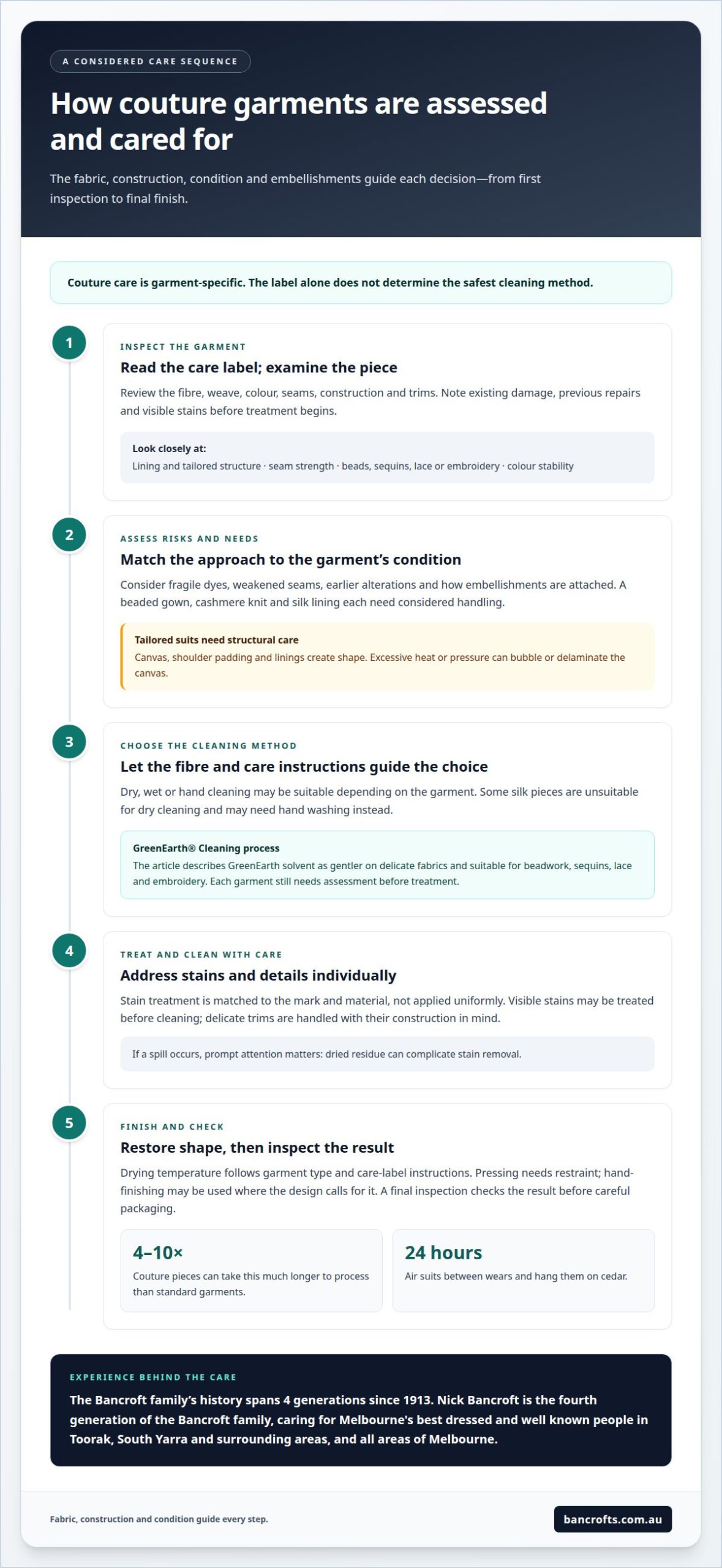
Couture care starts with an inspection of fabric, construction, seams, stains and trims. A suit’s canvas, shoulder padding and linings form its structure; excessive heat or pressure can bubble or delaminate the canvas.
| Care approach | Inspection focus | Treatment |
|---|---|---|
| Standard | Garment and care label | Routine soil |
| Couture | Structure and trims | Individual handling |
The cleaner reviews the care label, notes existing damage and discusses stains or previous repairs. Beads and trims are assessed, and visible stains may be treated before cleaning. A beaded gown, cashmere knit and silk lining each need considered handling. Finishing helps preserve the garment’s shape and details.
Couture pieces can take 4 to 10 times longer to process than standard garments. In Australia, duration depends on inspection, stain treatment and finishing. Silk may need hand washing if unsuitable for dry cleaning. Air suits for 24 hours between wears and hang them on cedar.
Care for delicate couture fabrics and embellishments
Silk chiffon, lace and cashmere respond differently to moisture, agitation and finishing. Beads, sequins and embroidery can snag, loosen or lose lustre if the treatment does not account for how each trim is attached. A professional assesses the fibres, colour stability and security of embellishments before selecting a cleaning method. This helps reduce risks such as colour transfer, distortion or detached decoration.
Vintage and archive couture need attention to age as well as design. Earlier repairs, weakened seams and fragile dyes can make a familiar fabric behave unpredictably. The cleaner notes existing wear and considers the garment’s provenance, construction and previous alterations before treatment. These details help preserve the piece as both clothing and material history.
Custom suits also need care that respects their individual fit and finish. Inspecting the lining, buttons, hand stitching and tailored details helps identify vulnerable areas before cleaning. A suitable method, controlled handling and careful finishing help limit unnecessary strain. For a couture garment, the safest approach is tailored to its fibres, trims and condition, not its label alone.
Delicate-fabric cleaning
Silk, cashmere and fine wool respond differently to moisture, agitation and heat. A cleaner first reads the care label and examines the fibre, weave and colour. Some silk pieces are unsuitable for dry cleaning and require hand washing instead. The fabric, not the designer label, determines the method.
Solvent cleaning uses a liquid solvent rather than water, although garments become wet during the process. A printed silk blouse may need different handling from a lined wool skirt. Before treatment, the cleaner considers colour transfer, seam strength and trim. Treat spills promptly, because dried residue can complicate stain removal.
Drying temperature is guided by garment type and the maker’s care-label instructions. Pressing needs restraint, since heat or pressure can alter delicate fibres and finishes. A chiffon evening dress needs careful support during handling to preserve its drape. These steps help retain the fabric’s character after cleaning.
How to assess a couture cleaner
Understanding what couture-certified dry cleaning means starts with the process, not a title. A considered service begins by inspecting the garment, identifying visible stains and noting its fabric, construction and care instructions. Those findings guide whether dry, wet or hand cleaning is suitable and how the garment should be finished.
Stain removal is matched to the mark and material, rather than applied uniformly. For a beaded piece, inspection includes its decorative details so they can be handled carefully during cleaning and pressing. The sequence matters: treatment follows assessment, with hand-finishing used where the garment’s design calls for it.
A final inspection checks the result before careful packaging. This practical sequence shows what couture care involves: informed assessment, garment-specific cleaning and attentive finishing. It also clarifies how the cleaner’s method relates to the piece entrusted to them.
GreenEarth dry cleaning for couture and delicate garments
The GreenEarth® Cleaning process is an eco-friendly dry cleaning method that uses no hazardous chemicals and is non-toxic to the environment. It uses GreenEarth solvent, which is gentler on delicate fabrics and does not damage beadwork, sequins, lace or embroidery. That can suit couture pieces with intricate surface details, though each garment still needs assessment.
A cleaner considers fibre, lining, colour and care label before selecting a treatment. Bancrofts Dry Cleaning uses the GreenEarth® process, which is non-toxic to the environment and uses no hazardous chemicals. It treats clothes like a mineral bath, leaving fabrics soft, supple, silky and smooth without damaging fibres or leaching dye. A beaded gown and silk blouse may still need different handling.
After cleaning, appropriate drying and finishing help protect shape and texture. Environmental care also depends on sound operation and correct handling of cleaning materials; no process removes the need for skilled inspection.
Caring for household textiles
Household textiles need care suited to their fibres, construction and use. A silk cushion cover, lined curtain and wool throw each call for a different assessment. Before cleaning, a professional examines the care label, seams, colour and existing wear. Stains and decorative trims also affect the treatment selected.
Quilts illustrate why construction matters. Cotton batting can bunch and clump in a washing machine, so the filling and stitching need consideration before cleaning. A professional assesses the textile’s materials and condition, then selects suitable cleaning and finishing methods. For lined curtains, the lining and outer fabric may respond differently, making inspection essential.
Bed linen and table linen benefit from professional laundry and pressing that takes fabric type and finish into account. Pressing restores a neat presentation, while careful handling supports the textile’s shape and texture. Bancrofts Dry Cleaning also cleans household items such as duvets, comforters, drapes and decorative pillows. The material, construction and care instructions guide the process, helping preserve textiles used every day.
Alterations and garment care
Alterations can extend a garment’s useful life by restoring fit and function without losing its original character. A trouser hem, jacket sleeve or loose seam each calls for attention to the garment’s construction, fabric and finish. On a tailored piece, even a modest adjustment can affect balance and proportion.
Before work begins, the garment is assessed for wear, seam strength, lining and previous repairs. A delicate silk dress, for example, needs different handling from a wool suit. Existing stitching and fabric condition help determine how an alteration can be made while limiting strain on the surrounding material.
Cleaning and alterations also support garment preservation. Stains or accumulated soil near a seam can affect how the fabric handles during repair, so the garment’s condition informs the sequence of care. Professional alterations and repairs can address fit or damage, while careful finishing helps the garment sit and move as intended. The aim is considered maintenance, not a change that compromises its design.
Convenient dry-cleaning services
Pickup and delivery can simplify garment care for busy households in South Yarra and across Melbourne, especially when workwear, evening wear and household textiles need attention together. Identify each item and note spills or repairs when arranging collection; this helps the cleaner assess garments on arrival. For couture, inspection guides handling.
Same Day Service can help with time-sensitive dry cleaning, but couture garments may need measured handling. Inspection, stain treatment, fabric requirements and finishing affect the work sequence. A beaded gown or structured suit shouldn’t be assumed to follow the same schedule as a simple garment. The method must protect its construction.
A clean garment bag helps shield finished clothing from dust and contact during transport. For wedding gowns intended for longer storage, use acid-free tissue in a box or cloth bag rather than plastic. Store it in a cool, dry place to avoid heat and dampness in order to prevent yellowing and mildew. Keep embellished garments supported to limit pressure on beads or embroidery.
Bancrofts Dry Cleaning
Bancrofts Dry Cleaning is Australia’s only certified couture dry cleaner, caring for Melbourne’s best dressed and well known people. Its approach considers each garment’s construction, fabric condition, embellishments and care instructions, so treatment suits the piece rather than its label alone. Turn to its expertise for couture, bridal and evening wear, as well as shirt laundry and other valued garments.
The Bancroft family’s history spans 4 generations since 1913. Nick Bancroft, the fourth generation of the Bancroft family, carries this heritage forward. GreenEarth expertise informs a considered approach to delicate garment care, with attention to fabric preservation and the details that give each piece its character. Available services include dry cleaning, wedding gown cleaning and restoration, and leather and suede cleaning.
Service extends to Toorak, South Yarra and surrounding areas, as well as all areas of Melbourne. For considered care of a couture or treasured garment, contact Bancrofts Dry Cleaning.
Frequently Asked Questions
What does couture certified dry cleaning mean?
Couture-certified dry cleaning describes specialist garment care guided by construction, fibre, trim and condition, rather than a routine process applied uniformly. “Certified” indicates a recognised qualification or status, but the certificate’s issuer and scope matter. For a couture piece, the practical value lies in whether assessment, treatment and finishing are adapted to that garment’s materials and design.
Which certifications or training qualify a dry cleaner to handle couture garments?
Training and credentials can indicate specialist knowledge, but the work also depends on applying that knowledge to each garment. Staff need to recognise fragile finishes, understand textile construction and note existing wear. A qualification alone cannot determine how a particular silk lining, feather trim or archive piece should be handled; the garment’s condition and care instructions guide its treatment.
How does couture dry cleaning differ from standard dry cleaning?
Couture care gives greater attention to the garment’s individual design and finish. A tailored coat with concealed fastenings, for example, may need different handling from a simple wool jacket. The cleaner considers how those details interact with the fabric, then plans suitable treatment and finishing. The distinction is a garment-specific approach, not simply a different label for routine cleaning.
What fabrics and couture garment details require specialist cleaning?
Delicate fibres and complex finishes can call for specialist assessment. Velvet pile may flatten under unsuitable pressure, while metallic thread or feather trim can be vulnerable during handling. Bonded layers and unusual linings also need consideration because their components may respond differently to treatment. On an archive piece, previous repairs and signs of age add considerations beyond the visible fabric.
What questions should I ask before entrusting a couture garment to a cleaner?
Share the garment’s care instructions and point out stains, previous repairs or areas of wear when presenting it. These details help shape the inspection and treatment plan. The cleaner assesses the fabric, construction and finish, then selects suitable cleaning and finishing methods. For an archive piece, its age and condition also inform handling, helping preserve its original character.
