
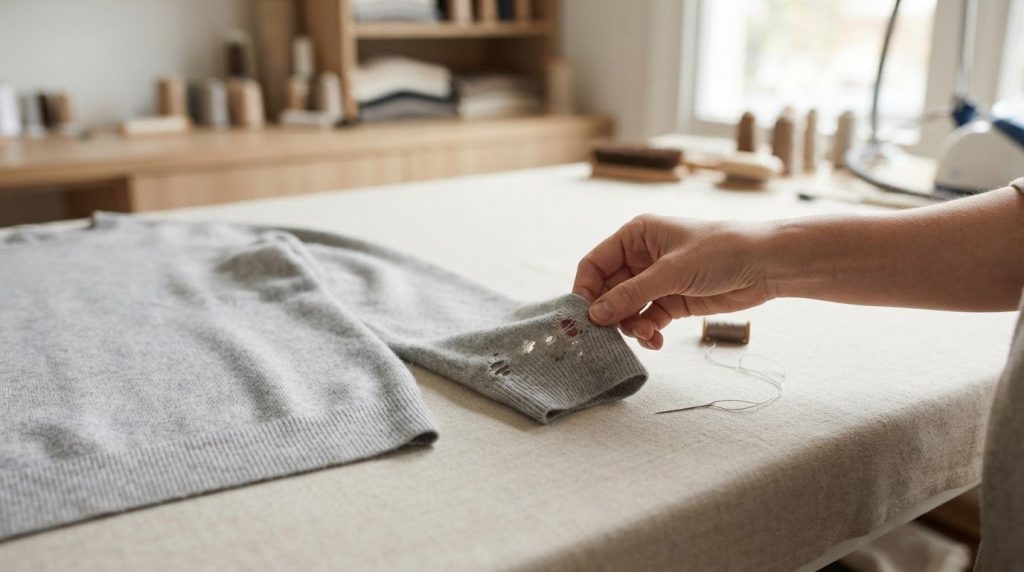
A cold wash can kill moth larvae, but it isn’t a complete response to suspected infestation. For protecting cashmere from moths, seal the garment in a plastic bag and freeze it for at least 48 hours, a treatment that can kill larvae or eggs. Machine washing alone shouldn’t be treated as proven egg control.
Finding a hole in a cherished cashmere garment can be disheartening, especially when it appears after seasonal storage. Moths may also affect nearby clothes, so inspect the wardrobe as well as the damaged piece. This guide explains how to spot holes, larvae and other signs of activity; what to do with damaged knitwear; how to clean cashmere before storing it; and how to handle garments that may have been exposed. You’ll also find practical ways to make storage less inviting to moths while protecting cashmere’s delicate fibres.
Key Takeaways
- Seal suspected cashmere in a plastic bag and freeze it for at least 48 hours to help kill moth larvae or eggs.
- Look for irregular holes, fine silk trails and small droppings, especially around cuffs, collars, underarms and hems.
- Clean cashmere before seasonal storage to remove traces that can attract moths, then store it carefully to help protect the fibres.
- Treat garments that have been in contact with an affected piece. For delicate cashmere, specialist dry cleaning can support its preservation; Nick Bancroft, the fourth generation of the Bancroft family, carries forward 4 generations since 1913, caring for Melbourne’s best dressed and well known people in Toorak, South Yarra and surrounding areas, and all areas of Melbourne.
1. What to do in case of moth holes in cashmere?
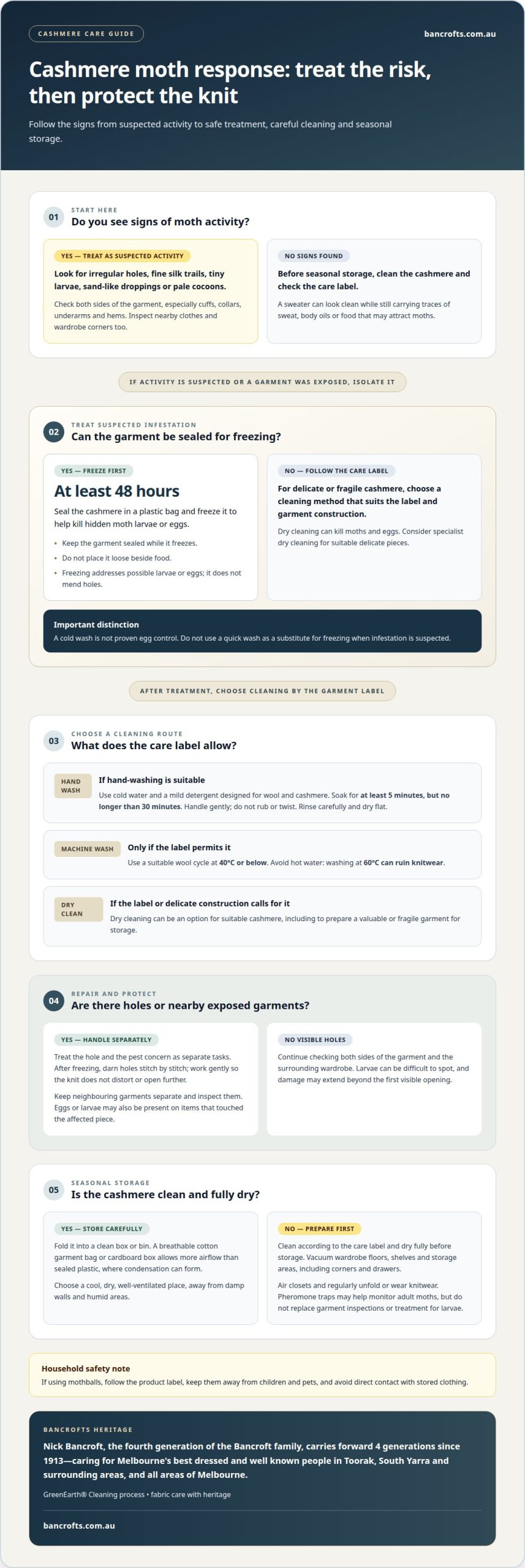
Small holes in cashmere call for two separate responses: deal with possible larvae and repair the knit. First, place the affected piece in a sealed plastic bag and freeze it for at least 48 hours. Freezing is used to kill moth larvae or eggs hidden among the fibres. A few days in the freezer is another recommended precaution when treating suspected infestation.
Keep the garment sealed while it freezes, and don’t place it loose beside food. After removing it from the freezer, inspect the bag and garment for signs of activity. Freezing can address hidden eggs and larvae, but it won’t mend holes or restore weakened stitches. Treat the piece before returning it to the wardrobe or storing it with other cashmere.
Moth larvae can damage cashmere fibres. Because cashmere is a natural fibre made from the undercoat of mountain goats, it can attract larvae seeking this food source. A hole may therefore indicate feeding rather than ordinary wear. Check the surrounding knit, too, as damage may extend beyond the first visible opening.
After freezing, address the holes separately. One approach is to wash the cashmere in cold water, then darn each hole stitch by stitch. Work gently: pulling the delicate knit can distort its shape or enlarge a small opening. If the piece has several holes, examine each one before repairing it so loose or damaged areas aren’t missed.
When protecting cashmere from moths, don’t treat a quick wash as a substitute for freezing if you suspect an infestation. Seal the garment in a bag and freeze it first, then handle cleaning and repair. Keeping pest treatment separate from restoring the garment’s appearance helps prepare the piece for safe storage.
2. Recognising moth damage and infestation
Inspect a cashmere sweater in bright light, turning it over to check both sides. Clothes moth damage often appears as small, irregular holes with jagged edges. Look closely at cuffs, collars, underarms and hems, where folds and wear can hide early damage. Even one hole is a reason to check nearby garments.
Look beyond the fabric. Tiny larvae, sticky silk threads, fine, sand-like droppings or pale cocoons in wardrobe corners can indicate moth activity. Larvae are difficult to spot, and their stringy trails may resemble cobwebs. Adult clothes moths are small, but it’s the larvae that cause the damage. Warm, dark places that are seldom disturbed, such as an undisturbed closet, can provide suitable hiding spots.
To reduce the chance of an infestation taking hold, air closets, vacuum shelves and floors, and regularly unfold or wear knitwear. Store clean garments properly, and inspect a sweater before seasonal storing. Cedar blocks, lavender sachets, dried thyme, rosemary and cloves can act as natural deterrents. Refresh or replace cedar and lavender every few months; rub cedar balls with sandpaper three to four times a year to revive their scent.
Pheromone moth traps can help monitor and reduce adult moth populations in a closet, but they don’t replace garment inspections or treatment for signs of larvae. Dry cleaning can kill moths and eggs, so consider professional cleaning for affected pieces, following the care label and taking the garment’s delicate fibres into account.
For households with children or pets, avoid placing mothballs where they can be reached, and follow the product label if using them. Keep them away from direct contact with stored clothing. If an infestation has affected a treasured piece, professional garment care can help address it with attention to the fabric.
3. Cleaning cashmere before storage
Clean cashmere garments before putting them away for the season. Moths can be attracted to traces of sweat, body oils and food, even when a sweater looks clean. Check the care label, then choose hand-washing or dry cleaning according to the garment’s instructions and construction.
For hand-washing, use cold water and a mild detergent designed for wool and cashmere. Let the garment soak for at least five minutes, but no longer than 30 minutes. Handle the knit gently rather than rubbing or twisting it, which can distort the fibres. Rinse carefully, then dry it flat so the garment keeps its shape.
If the label permits machine washing, keep the water temperature at or below 40 degrees Celsius and use a suitable wool cycle. Delicate cashmere, especially a 100% cashmere piece, needs careful handling. Avoid hot water: washing at 60 degrees Celsius can ruin knitwear. For a valuable or fragile item, dry cleaning is another way to prepare it for storage.
Prepare the closet before storing clean garments. Vacuum floors, shelves and storage areas to remove dust and debris, including any white cocoons in wardrobe corners or drawers. Choose a cool, dry, well-ventilated place; heat and humidity can make storage conditions less suitable for cashmere.
For seasonal storage, fold cashmere into a clean box or bin to protect it from moths, dust and moisture. A breathable cotton garment bag or cardboard box allows more airflow than sealed plastic, where condensation can form. Keep the container in a dry area, away from damp walls or humid parts of the home. Clean, fully dry fibres and a tidy storage space help limit residue and hiding places that attract moths.
4. Treating affected cashmere and nearby garments
If one cashmere sweater shows moth damage, treat it as a wardrobe concern, not just an isolated hole. Eggs or larvae may also be present on garments that touched the affected piece. Remove neighbouring items from storage and keep them separate from clothes that weren’t exposed. This helps prevent a possible infestation from spreading while you arrange treatment.
Dry cleaning can kill moths and eggs, making it a treatment option for suitable cashmere garments. Check each care label before choosing a cleaning method, since the construction, trims and fibre blends can affect how a piece should be handled. A delicate knit may need a different approach from a sturdier wool garment. Don’t assume the visible hole is the only area requiring attention.
Work through the wardrobe systematically. Set aside garments that shared a drawer, shelf or storage container with the damaged cashmere. Examine each item for irregular holes, silk threads or other signs of larvae, including pieces that look untouched at first glance. Treat garments that were in contact with an affected item, as they may also be infested.
Keep potentially affected pieces separate until they’ve been treated. Clean the storage area before returning garments, and don’t put untreated clothing back beside the cashmere sweater. Once the affected items have been addressed, store clean, dry pieces apart from garments still awaiting care. This reduces the chance of reintroducing moths through contact with untreated fabric.
For a treasured cashmere piece or several garments requiring care, use the 24/7 Automated Collection to bring them in for professional dry cleaning. Keep affected items separate for collection, and include nearby garments that shared their storage space. Treating the group, rather than only the garment with visible damage, is the clearest practical takeaway.
Bancrofts Dry Cleaning
Bancrofts Dry Cleaning in South Yarra, Melbourne, can care for cashmere and other delicate garments that need professional dry cleaning after moth exposure. The GreenEarth® process is used for garment care, with attention to the fibres and finish of valued pieces.
Nick Bancroft, the fourth generation of the Bancroft family, continues a history spanning 4 generations since 1913, caring for Melbourne’s best dressed and well known people. The service reaches Toorak, South Yarra and surrounding areas, as well as all areas of Melbourne.
If moths have affected your cashmere or nearby garments, contact Bancrofts Dry Cleaning in South Yarra to arrange professional dry cleaning for suitable pieces.
Give Each Cashmere Piece a Thoughtful Return to Storage
A moth-damaged garment need not be defined by the mark it carries. Once its condition has been assessed and any necessary care is complete, consider how you’d like to enjoy it: wear it as part of a considered wardrobe, save it for a special occasion or treasure it as an heirloom. Protecting cashmere from moths is ultimately about preserving the stories and craftsmanship woven into a garment.
Let each piece guide its own future. A cherished knit can remain part of your life, carrying its quiet elegance forward rather than being forgotten at the back of a wardrobe.
Frequently Asked Questions
Can moth larvae and eggs be destroyed in the washing machine?
Don’t rely on a standard machine cycle to reliably destroy both larvae and eggs. If an item may be infested, keep it separate from ordinary laundry while you decide how to treat it. This helps avoid transferring possible pests through a shared wash load or hamper. Follow the cashmere’s care label when cleaning, as machine washing may not suit every garment.
Do cedar balls really work?
Cedar balls are a deterrent, not a way to eliminate an infestation. Their scent may help discourage moths, but it doesn’t show that eggs or larvae are gone, and cedar can’t repair a damaged knit. Treat it as one part of wardrobe care, not your only response to suspected moth activity.
How do I know if I have moths in my wardrobe?
A pheromone trap can indicate adult moth activity, but a catch won’t show which garment is affected. Use the trap to monitor activity, then inspect stored pieces individually. A trap may alert you to moths; checking each garment helps locate evidence. Don’t assume every item in the wardrobe has been damaged.
How to effectively protect cashmere from moths?
Use a repeatable wardrobe routine instead of relying on a single deterrent. For example, inspect garments during each seasonal changeover and keep a record of any pieces that show damage. This can help you notice whether activity recurs in the same storage area and identify which garments need attention.
What to do in case of moth holes in cashmere?
Before attempting a repair, photograph each hole in clear light and note its position on the garment. This simple record helps distinguish existing holes from any that appear later. Avoid tugging at an opening, as tension can distort delicate knitwear. Once pest treatment is complete, assess whether the fabric around each hole is strong enough to support a repair.
Why Are Moths Attracted to Your Clothes?
It’s the larvae, not adult moths, that damage cashmere. They feed on keratin, a protein found in animal fibres, which is why cashmere and other natural animal-fibre garments can be vulnerable. Adult moths are a warning to inspect stored clothing, even though the adults themselves don’t create holes in the fabric.
