
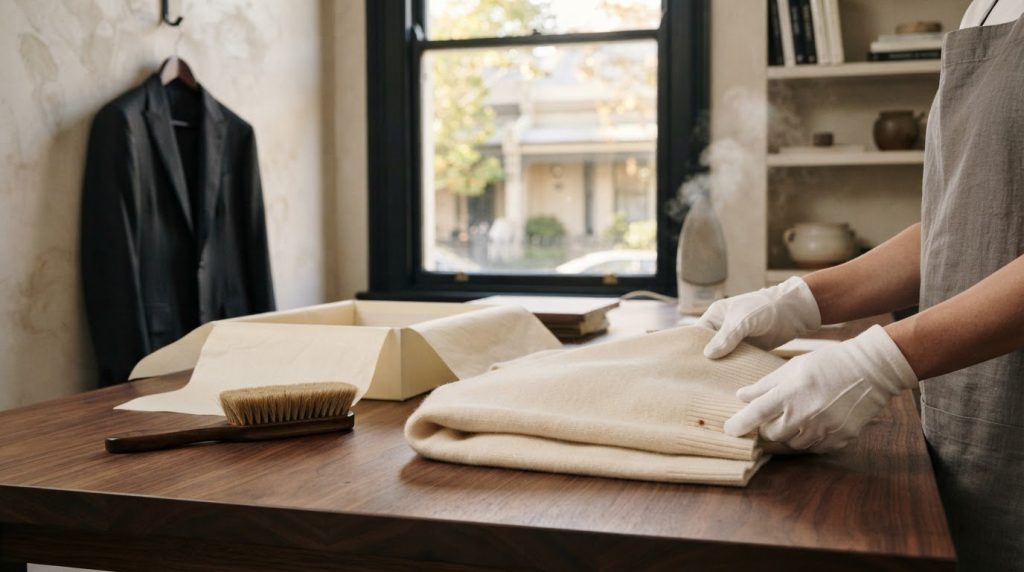
Cashmere doesn’t need dry cleaning after every wear. For cashmere dry cleaning in Melbourne, once or twice a year is a useful guide, while airing between wears and storing the garment carefully can reduce unnecessary cleaning. Treat visible marks promptly: food, coffee, wine, makeup and oil-based stains can become harder to remove over time.
It’s natural to want to protect the softness, shape and finish of a treasured knit. This guide explains how often to clean cashmere and other luxury clothing, why professional care matters, and how specialist cleaning, pressing and stain treatment can help care for delicate garments.
At Bancrofts Dry Cleaning, Nick Bancroft, the fourth generation of the Bancroft family, continues a history spanning 4 generations since 1913. Caring for Melbourne’s best dressed and well known people, the South Yarra specialist serves Toorak, South Yarra and surrounding areas, as well as all areas of Melbourne, with couture garment care and the GreenEarth® Cleaning process.
- Cashmere generally needs cleaning once or twice a year; air it after wearing and clean it before long-term storage.
- Seek early professional assessment for stains, and avoid rubbing delicate fibres or applying unsuitable products at home.
- Care labels, construction and embellishments help determine suitable treatment for luxury garments.
- Bancrofts Dry Cleaning carries the Bancroft family history spanning 4 generations since 1913. Nick Bancroft is the fourth generation of the Bancroft family, caring for Melbourne’s best dressed and well known people in Toorak, South Yarra and surrounding areas, and all areas of Melbourne.
Laundry, ironing and stain-removal services
Cashmere stains need careful assessment before treatment. Food, coffee, wine, makeup and oil-based marks can become harder to remove if left untreated. Describe what caused the stain, when it appeared and any cleaning attempts you’ve made. This context helps the cleaner assess the mark alongside the knit’s texture, colour and condition.
How long does cashmere dry cleaning take in Melbourne? Turnaround depends on the garment’s assessment, stain treatment, cleaning method and finishing. A complex mark or delicate construction may need different handling from a straightforward refresh.
How should you prepare cashmere for dry cleaning? Check the care label and point out stains, loose seams, missing buttons or worn areas. Keep the garment dry, and avoid applying stain remover before cleaning, as unsuitable products can affect colour or texture.
For cashmere stains, professional dry cleaning allows treatment to be selected for the mark and garment. Explain whether it came from oil, makeup, coffee or wine. Avoid rubbing or scrubbing at home: friction can distort the knit, and household products may leave residue or worsen discolouration. Prompt attention can make stain treatment easier.
What stains and damage risks should you discuss with a cashmere cleaner? Describe the stain, any home treatment and visible issues such as pilling, stretched areas or moth holes. These details help distinguish cleaning needs from damage that may require separate attention.
Do Melbourne dry cleaners offer cashmere repair, depilling or moth damage treatment? These are separate from cleaning: dry cleaning alone will not mend holes or remove pills. Raise the specific issue when arranging care, particularly if moth damage has weakened the knit.
What are the best ways to store cashmere after cleaning? Fold it rather than hanging it for long periods, which can stretch delicate knitwear. Store the piece clean and dry, and air it after wearing before returning it to the wardrobe.
The Bancroft family history spans 4 generations since 1913, and Nick Bancroft is the fourth generation of the Bancroft family. Their purpose is caring for Melbourne’s best dressed and well known people in Toorak, South Yarra and surrounding areas, as well as all areas of Melbourne.
Why Do Luxury Fabrics Need Professional Dry Cleaning?
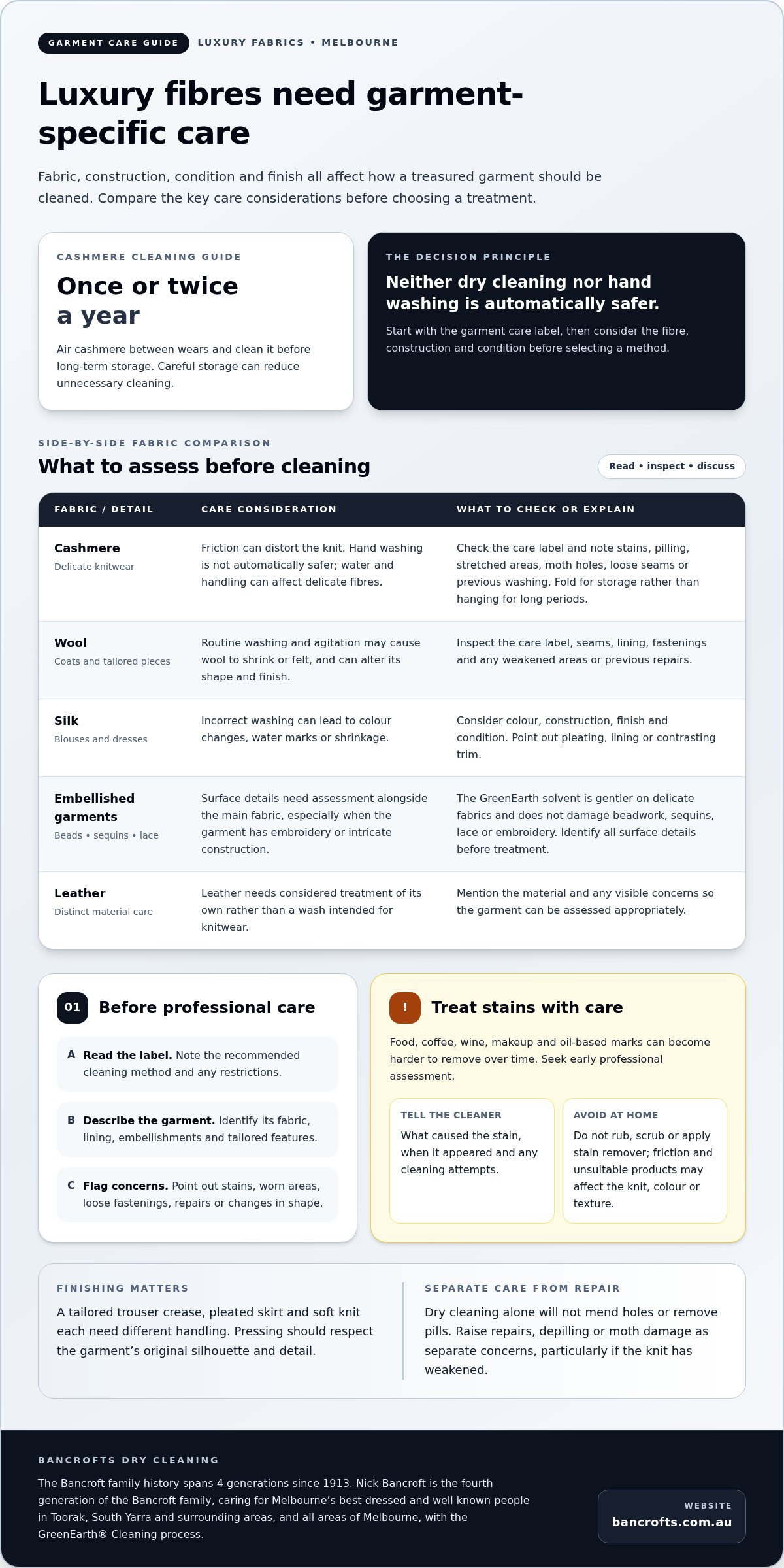
Neither dry cleaning nor hand washing is automatically safer for cashmere. Follow the garment care label, then consider the fibre, construction and condition before choosing a method.
Specialised Care for Luxury Fabrics
Cashmere, wool and silk can respond poorly to routine washing. Wool may shrink or felt, while agitation can alter its shape and finish. Silk can develop colour changes, water marks or shrinkage if washed incorrectly. Check the care label, seams, lining and embellishments before cleaning. A specialist assessment helps match the method to the garment instead of treating every piece alike.
Treatment for Delicate Fabrics
Professional dry cleaning uses a controlled process to remove dirt, marks and odours while helping protect delicate fibres. For embellished garments, assess beadwork, sequins, lace and embroidery alongside the main fabric. The GreenEarth solvent is gentler on delicate fabrics and does not damage those details. Leather also needs its own considered treatment, rather than a wash intended for knitwear.
For cashmere and specialty fabric care in Elwood, read the label and consider construction, colour and condition. A cashmere jumper with a tailored collar or contrasting trim needs different assessment from an unstructured knit. Mention previous washing and visible texture changes. Hand washing is not automatically safer; water and handling can still affect delicate fibres.
The Bancroft family history spans 4 generations since 1913. Nick Bancroft is the fourth generation of the Bancroft family, caring for Melbourne’s best dressed and well known people in Toorak, South Yarra and surrounding areas, and all areas of Melbourne.
A silk blouse, wool coat and cashmere cardigan each present distinct care considerations. Professional attention is particularly useful when a piece combines fibres, has a special finish or carries intricate detailing. For guidance on delicate garments, explore specialist fabric care as a considered next step.
Designer and luxury clothing care
Designer clothing combines fabric, construction and finish in ways that call for garment-specific attention. A lined wool jacket, a silk dress with pleating and a cashmere cardigan each respond differently to cleaning and finishing. Before treatment, inspect the care label, seams, lining, fastenings and surface details. This helps identify features that could be affected by cleaning or pressing.
Consider the garment’s history as well as its materials. A vintage coat may have weakened seams, while a frequently worn evening dress may carry perspiration or food stains around its neckline and cuffs. Point out repairs, loose threads, previous alterations and earlier stain treatments. These details help the cleaner assess the piece’s condition and plan suitable care.
- Read the label: note the recommended cleaning method and any restrictions.
- Describe the garment: identify its fabric, lining, embellishments and tailored features.
- Flag concerns: point out stains, worn areas, loose fastenings or changes in shape.
Pressing is part of the finish, not an afterthought. A sharply tailored trouser crease, a pleated skirt and a soft knit each need different handling. The aim is to refresh the clothing while respecting its original silhouette and detail. Ask for a professional assessment when a garment combines fabrics or has complex construction; one approach may not suit every component.
After cleaning, let garments air before returning them to the wardrobe. Fold knitwear rather than hanging it, which can stretch the shoulders. Keep structured jackets on suitable hangers to support their shape. Before long-term seasonal storage, have luxury pieces professionally cleaned, particularly after exposure to perspiration, food or other contaminants. This helps care for clothing between seasons and avoids storing pieces with residue that may become harder to address later.
How often to clean cashmere and luxury clothing
Cashmere does not need cleaning after every wear. Once or twice a year is a useful guide, with the garment care label and its condition informing each decision. Air a jumper after wearing it, then let it rest before returning it to the wardrobe. This can reduce everyday odours without unnecessary washing.
Clean sooner if a garment has visible marks, perspiration or absorbed food smells. An odour can remain even when the colour looks unchanged, while a small spill may become harder to treat if left. Avoid masking odours with sprays, which can leave residue on delicate fibres. Note where the mark is and what caused it before arranging professional care.
Use these cues to decide when a piece needs attention:
- After a single wear: air a clean cashmere layer before storing it.
- Before seasonal storage: clean garments exposed to stains, perspiration or other contaminants.
- After a spill: arrange prompt assessment rather than rubbing the fabric or applying a household product.
Winter coats and everyday knits have different patterns of use. A coat worn over several layers may need less frequent cleaning than a cardigan worn directly against the skin. After an event, check a wedding outfit for marks around the hem, cuffs and underarms. Wedding gowns also benefit from careful cleaning before long-term storage, as stains or perspiration may remain on the fabric.
After cleaning, fold cashmere instead of hanging it for long periods, which can stretch the knit. Store it dry, away from direct pressure that may flatten its shape. If the garment has been worn repeatedly through winter, or carries a lingering odour, arrange cleaning before putting it away. For a wedding gown that needs preservation, arrange professional gown cleaning and restoration before seasonal storage.
Bancrofts Dry Cleaning: Dry Cleaning
Bancrofts Dry Cleaning provides dry cleaning for cashmere and other valued garments, with care guided by each piece’s fabric and condition. Its GreenEarth® Dry Cleaning process uses no hazardous chemicals and is non-toxic to the environment.
The Bancroft family’s history spans 4 generations since 1913, with Nick Bancroft the fourth generation of the Bancroft family. The business is dedicated to caring for Melbourne’s best dressed and well known people, serving Toorak, South Yarra and surrounding areas, as well as all areas of Melbourne.
Bring a cashmere garment for professional care when it needs cleaning, has a stain or is being prepared for seasonal storage. Bancrofts also provides Shirt Laundry, Wedding Gown Cleaning & Restoration, and Leather & Suede Cleaning.
For considered care of a cherished garment, contact Bancrofts Dry Cleaning.
Give treasured garments a thoughtful next chapter
Choose care that respects how a garment is made and the memories it carries. For cashmere dry cleaning in Melbourne, share the care label, any stains and previous treatments when arranging professional care. This helps the cleaner understand the piece before selecting the cleaning process.
Bancrofts Dry Cleaning offers Dry Cleaning, Shirt Laundry, and Wedding Gown Cleaning & Restoration. The Bancroft family’s history spans 4 generations since 1913, with Nick Bancroft the fourth generation of the Bancroft family. Its purpose is caring for Melbourne’s best dressed and well known people, serving Toorak, South Yarra and surrounding areas, as well as all areas of Melbourne.
Whether you’re preserving a cashmere heirloom, preparing a gown for storage or refreshing a treasured shirt, considered care can help each piece remain part of your wardrobe. Contact Bancrofts Dry Cleaning to discuss care for your garments and take the next step with confidence.
Frequently Asked Questions
How Often Should Cashmere & Luxury Clothing Be Dry Cleaned?
Cashmere is generally cleaned once or twice a year, rather than after every wear. Let a jumper air before putting it away, then consider its use and condition when you next change your wardrobe. A piece worn close to the skin or exposed to smoke may need attention sooner than an occasional outer layer. Follow its care label when deciding.
Where Can I Find Luxury Dry Cleaning in Melbourne?
For cashmere dry cleaning in Melbourne, Bancrofts Dry Cleaning is based in South Yarra and serves customers across Melbourne. Its GreenEarth® Dry Cleaning process uses no hazardous chemicals and is non-toxic to the environment. This offers an alternative cleaning process for delicate garments. Share the item’s fabric and any particular concerns when arranging care.
Which Melbourne dry cleaners specialise in cleaning cashmere garments?
Bancrofts Dry Cleaning provides specialist care for high-fashion and delicate garments, including cashmere. Its cleaning process includes garment inspection, stain removal, cleaning, pressing, hand-finishing and a final inspection. These steps matter for knitwear with shaped cuffs, trim or other details that need attention beyond a routine refresh. Bring the garment’s care label and point out any areas of concern.
Which Melbourne suburbs offer cashmere dry cleaning and pickup or delivery?
Bancrofts Dry Cleaning is located in South Yarra and serves Toorak, South Yarra and surrounding areas, as well as customers across Melbourne. Pickup and delivery are available. When arranging care for cashmere, share your suburb and garment details so collection can be coordinated for your location.
How can I find a reputable cashmere dry cleaner in Melbourne?
Choose a cleaner whose process starts with inspection and considers the garment’s care label, fabric and construction. Bancrofts Dry Cleaning’s process includes stain removal, cleaning, pressing, hand-finishing and a final inspection. Share previous treatments and visible wear so the garment receives care suited to its condition. A clear, garment-led process is more useful than assuming every knit needs identical treatment.
