
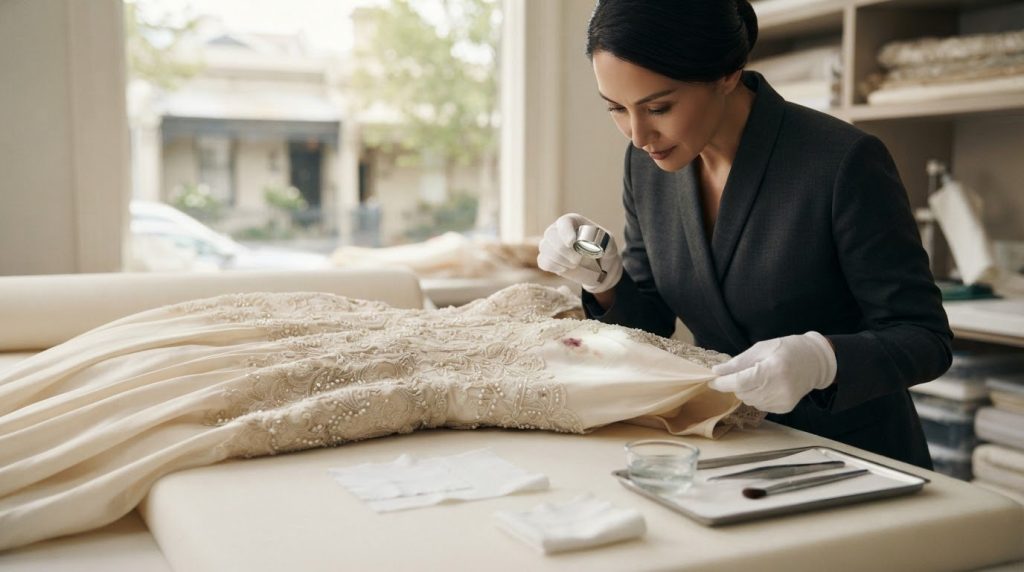
With silk, lace, beading or other delicate details, rubbing a stain or applying a household product can make visible damage worse. For stain removal on delicate fabric Melbourne, start with a careful assessment, not a one-size-fits-all remedy. Check the garment care label, avoid heat and untested products, and don’t rub the mark. If the affected area is wet, keep it from touching another part of the garment.
A treasured garment may have personal or investment value, so it is worth pausing before attempting a home remedy. Fabric, stain type and garment construction all affect the next step. Based in South Yarra, Bancrofts Dry Cleaning offers specialist care for high-fashion, bridal and evening wear, as well as dry cleaning, laundry and alterations. Its GreenEarth cleaning process is used in caring for garments and household textiles, with services available across the Melbourne metropolitan area.
Key Takeaways
- For stain removal on delicate fabric Melbourne, check the care label and avoid rubbing or applying extra products before the garment is assessed.
- Treatment choices depend on the fibre, colour, construction, embellishments and stain, not just the visible mark.
- Consider the garment’s value and the uncertainty of the stain before trying a home remedy. A professional assessment can help inform the next step.
- Bancrofts specialises in high-fashion, bridal and evening wear and uses the GreenEarth cleaning process.
- Based in South Yarra, Bancrofts serves the Melbourne metropolitan area. The family-owned business has been operating for over five generations.
Stain removal on delicate fabric in Melbourne: why the fabric comes first
A fresh mark on a valued garment can be unsettling, particularly when the piece is silk, intricately made or connected to an important occasion. Resist the urge to rub it or reach for a familiar household product. First consider the garment and the stain, then decide whether any treatment is appropriate.
There is no universal method for stain removal on delicate fabric in Melbourne or elsewhere. Fibre, colour, construction, embellishment and stain type all inform the decision. A treatment that works on one item may affect another’s colour, surface or structure. Good stain care starts by matching the proposed treatment to both the textile and the mark.
Which fabrics and garment details need particular care?
Silk, lace, fine wool and embellished textiles may need particular attention, but the fibre alone does not tell the whole story. A lined jacket, layered gown or beaded top has details that may respond differently to cleaning than its main fabric. Seams, trims and decorative work also affect how the garment should be assessed.
Check the garment care label and share its instructions with your cleaner. If the label is missing or unclear, say so rather than assuming the item can be washed. The principles of professional textile conservation also show why careful handling matters when preserving a textile’s condition and character.
Why the stain itself changes the treatment decision
The appearance of a mark may offer clues, but it is not a reliable treatment recipe. An oily mark, a protein-based stain and a coloured spill may each call for different consideration. The fabric’s response matters just as much, so identifying the stain does not by itself determine a safe course of action.
Age, previous treatment and exposure to heat may also affect what a cleaner observes. If you know what caused the stain, tell the cleaner. Mention when it appeared and any products or methods already tried. This history can inform the assessment, but it cannot guarantee a particular result.
Bancrofts is based in South Yarra and specialises in high-fashion, bridal and evening wear. Its garment-care services use the GreenEarth cleaning process. For a delicate piece, the fabric, construction and stain still need to be considered individually.
How delicate-fabric stain removal works: assessment before treatment
A careful cleaner starts by assessing the garment, not by promising a result or applying a product automatically. The assessment can identify what the item may tolerate and what the stain may require. A useful sequence is to identify the textile, inspect the mark, review previous attempts and then consider an approach suited to the whole piece. Treatment should follow assessment of both the fabric and the stain.
What a professional assesses before treating a stain
The fibre and care label offer an initial guide, but they are only part of the picture. A cleaner may also consider colour, construction, lining, trims and embellishments. The mark’s position matters: a stain beside a seam, on a layered panel or close to embroidery may need particular attention. Its age and any earlier exposure to products or heat can also inform the assessment.
Share what you know. Explain when the stain appeared, what may have caused it and whether you have already tried to treat it. Point out the garment care label, especially if its instructions are unclear or the item has unusual construction. Care-label wording and symbols provide useful context for discussing how the garment should be handled.
How the cleaning process relates to delicate textiles
Bancrofts uses the GreenEarth cleaning process, a silicone-based process described as non-toxic and environmentally friendly. The cleaning process is one part of garment care, not a guarantee that every fibre, construction or stain is suited to the same treatment. The garment and mark still need individual consideration, and no stain-removal outcome should be assumed before assessment.
A cleaner may consider the whole garment, not just the visible spot, because choices can affect surrounding fabric, linings and details. This broader view is especially relevant when an item has sentimental or investment value. To learn more about the service, explore Bancrofts’ specialist garment care.
For Melbourne customers, Bancrofts’ South Yarra location offers specialist care for high-fashion, bridal and evening wear. The business also provides dry cleaning, laundry and professional alterations, so customers can discuss the garment’s needs rather than treating a mark in isolation.
Home treatment or professional stain removal on delicate fabric?
A familiar household remedy is not automatically suitable for a delicate garment. The same product or technique can behave differently across fibres, dyes, linings and embellishments. A small, well-intended attempt may also complicate a later assessment. Before trying anything, weigh the stain’s uncertainty against the garment’s construction and personal or investment value.
When should you avoid treating a delicate stain at home?
Be especially cautious with high-value, structured or lined garments, and pieces finished with beads, lace or embroidery. Rubbing, heat or an untested product may affect the fabric or make it harder to assess what happened. Avoid experimenting if the care label is unclear or the garment is particularly precious. If one careful attempt has not helped, stop rather than trying another remedy. Tell a cleaner what you used and when.
| At-home handling | Professional assessment |
|---|---|
| Check the garment care label. Avoid vigorous rubbing, added heat and untested products. Don’t assume a remedy is safe because it worked on another textile. | Consider the fibre, colour, construction and embellishments alongside the mark, its location and any previous treatment. |
| May be reasonable only when the care instructions are clear and the garment and stain present little uncertainty. Stop if the first attempt is unsuccessful. | Can help inform a suitable approach for a complex, valuable or previously treated item, without promising that every stain will disappear. |
What can a specialist offer that a home remedy cannot?
A specialist can assess the garment as a complete piece rather than treating the mark in isolation. Considering the materials, seams, linings and decorative details can help guide the care decision. The aim is to make an informed choice, not to guarantee stain removal. Results depend on the garment and the stain.
Bancrofts uses the GreenEarth cleaning process, but no process should be assumed to suit every textile or stain without assessment. Readers considering specialist garment care can also look for Bancrofts’ guide, “Couture Dry Cleaners Australia”.
For an item that needs specialist attention, consider the type of garment and its construction before choosing a cleaner. Bancrofts offers high-fashion, bridal and evening-wear cleaning from South Yarra, serving customers across the Melbourne metropolitan area.
What to do when a delicate garment gets stained in Melbourne
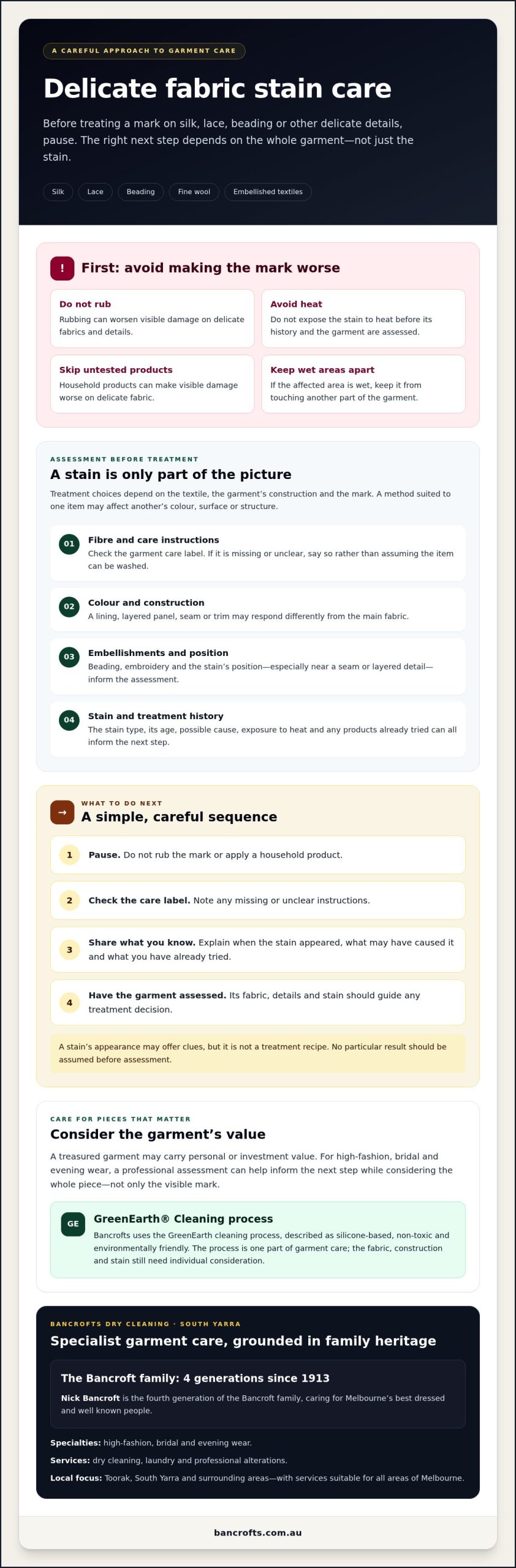
A fresh mark can make you want to act immediately, but restraint is often the safer first response for a delicate garment. Check the care label and note what you know about the stain before choosing a treatment. Avoid vigorous rubbing, added heat and further products until suitable care has been considered.
- Check the garment care label. Follow its instructions and make a note if they are unclear or the label is missing.
- Pause further treatment. Don’t apply another product or use heat, as either may complicate assessment.
- Record the stain history. Note what caused the mark, when it occurred and any products or methods already applied.
- Keep the garment carefully. Place it in a clean, dry space. If the affected area is wet or treated, avoid folding it against another part of the garment.
How to prepare a delicate garment for professional assessment
Keep the item supported and avoid pressing, rubbing or adding anything to the stain. Share the care-label instructions and your notes about the mark, including any earlier treatment. Details that seem minor may help a specialist consider the garment’s history alongside its fabric and construction. Wait until the item has been assessed before assuming a treatment time or result.
What to ask a Melbourne garment-care specialist
Ask how the fabric, trims and stain will be assessed before a treatment approach is selected. Check whether the garment care label and previous treatment will inform that decision. A careful specialist should be able to explain the considerations without promising that every mark can be removed. Bancrofts uses the GreenEarth cleaning process, while care decisions remain specific to the garment.
Bancrofts is based in South Yarra and serves the Melbourne metropolitan area. When discussing a delicate piece, share its care-label instructions, the location of the mark and anything already applied. That gives the cleaner useful context for considering the next step.
For guidance on a delicate piece, ask Bancrofts about delicate garment care.
Choosing Bancrofts for delicate-fabric stain care in Melbourne
A couture gown, treasured occasion piece or designer garment deserves consideration when a stain needs attention. Its cut, finish and personal history matter alongside the fabric. Bancrofts is a South Yarra garment-care provider specialising in high-fashion, bridal and evening wear, with services for garments that need more than routine laundry.
A heritage of caring for valued garments
Bancrofts is a family-owned and operated business with a history spanning over five generations. Founded in 1913, it is led by owner Nick Bancroft. The business provides specialist garment care from South Yarra, including dry cleaning, laundry and professional alterations.
Bancrofts uses the GreenEarth cleaning process as part of its garment-care offering. A cleaning process alone cannot determine the right choice for every stain, so assessment of the item remains central. To learn more about the business’s history and approach, see “Premier Dry Cleaning in South Yarra: The Bancroft Legacy of Garment Care”.
How to take the next step with Bancrofts
Before arranging care, be ready to describe the garment’s fabric and construction, where the stain is, what may have caused it and when it appeared. Share the care-label instructions and mention any previous products or treatment attempts. These details give the cleaner useful context for discussing the garment and considering an appropriate next step. No stain-removal result or timing should be assumed before the piece has been assessed.
Bancrofts serves customers across the Melbourne metropolitan area from South Yarra. If you’re considering stain removal on delicate fabric Melbourne, start with a conversation about the garment rather than another home treatment. Speak with Bancrofts about your garment.
Choose considered care for a valued garment
For a delicate stain, pause before reaching for a household remedy. The garment’s fibre, construction and embellishments, together with the type and history of the mark, should guide the next step. Check the care label, avoid vigorous rubbing or added heat, and tell a specialist about any previous treatment. No single approach suits every fabric and stain, and an assessment does not promise that every mark will disappear.
Bancrofts provides specialist cleaning for high-fashion, bridal and evening wear, using the GreenEarth cleaning process. Based in South Yarra, the family-owned business serves the Melbourne metropolitan area and offers dry cleaning, laundry and professional alterations.
If a valued piece needs considered attention, share its fabric, stain and care-label instructions with Bancrofts. Contact Bancrofts about your garment to discuss a suitable next step for stain removal on delicate fabric Melbourne.
Frequently Asked Questions
Can you remove stains from delicate fabrics without damaging them?
A specialist can assess a stain and consider the garment’s care needs, but no treatment can be guaranteed to leave every fabric unchanged or remove every mark. Fibre, colour, construction, embellishments and stain history all matter. Share the care label and any treatment attempts with the cleaner. For a valuable or complex piece, avoid experimenting at home and seek an assessment before applying products or heat.
What should I do first when a delicate garment gets stained?
Check the garment care label and avoid vigorous rubbing, heat or additional products. If the stain is wet, don’t fold it against another part of the garment. Keep the item in a clean, dry place and note what may have caused the mark, when it happened and anything already applied. This information gives a cleaner useful context when assessing the garment.
Is dry cleaning suitable for every delicate fabric stain?
No. Dry cleaning is not automatically suitable for every delicate textile or stain. A cleaner needs to consider the care label, fibre, colour, garment construction, trims and embellishments, as well as the mark itself. An oily stain may call for different consideration from a coloured spill, but the stain category alone does not decide the treatment. Ask for an assessment, especially if the label is unclear.
Can I use a stain remover on silk, lace or embellished clothing?
Don’t assume a stain remover is safe for silk, lace or embellished clothing just because it is familiar or worked on another item. A product may affect colour, fibres or decorative details, and a home attempt may complicate later assessment. Check the care label, avoid untested products and seek professional advice if the instructions are unclear or the piece is valuable. If you have already applied something, tell the cleaner what it was.
How does a cleaner choose a stain treatment for delicate fabric?
A cleaner begins by identifying the textile and reviewing its care-label instructions, then considers the stain’s appearance, location and history. Colour, lining, seams, trims and embellishments may also influence the assessment. Share the likely cause of the mark, when it occurred and any previous products or treatment. The approach should reflect both the garment and the stain, rather than rely on one method for every item.
Where can I get delicate-fabric stain care in Melbourne?
Bancrofts Dry Cleaning is based in South Yarra and offers specialist cleaning for high-fashion, bridal and evening wear. For stain removal on delicate fabric Melbourne, discuss the garment and its care label with the team. Bancrofts serves the Melbourne metropolitan area and also offers dry cleaning, laundry and professional alterations.
Does GreenEarth cleaning remove every type of stain?
No cleaning process should be taken as a guarantee that every stain will be removed. Bancrofts uses the GreenEarth cleaning process, but a suitable approach still depends on the fabric, construction and stain, including any previous treatment. Share what you know about the mark and follow the garment care label. A professional assessment can help set realistic expectations and guide care for a delicate or valued piece.
