

What if a dress looks perfectly clean but still carries residue that appears after it’s been pressed or worn? Sugary drinks and oils can leave residues that are difficult to see once dry. Heat or time may change some residues, making a yellow or brown mark more visible and harder to treat. A considered approach to invisible stain removal from dress fabric begins with restraint, not guesswork.
It’s understandable to want to tackle a suspicious area at home, particularly when the spill’s source or location is uncertain. But ironing, machine drying or applying an improvised treatment may complicate care. This article explains why hidden stains can emerge, what to do before they resurface, which home treatments to avoid, and when a professional assessment may be the safer choice for a delicate, embellished or valuable dress.
Bancrofts Dry Cleaning is based in South Yarra, Melbourne, and specialises in care for high-fashion, bridal and evening wear. The family-owned business has operated since 1913 and is now led by owner Nick Bancroft. Bancrofts uses the GreenEarth® Cleaning process and also offers professional alterations, laundry and garment care.
- A dress can look clean while dried spill residue remains. Oxidation or heat may make some hidden marks more visible later.
- For invisible stain removal from dress fabric, note any suspected spill and inspect gently before choosing a treatment.
- Check the garment care label, and avoid rubbing, scrubbing, heat or untested household products that could complicate care.
- Delicate, embellished or valuable dresses may benefit from professional assessment. Bancrofts specialises in high-fashion, bridal and evening wear and uses the GreenEarth® Cleaning process.
- Bancrofts is a family-owned business based in South Yarra, Melbourne, with a history dating to 1913. Owner Nick Bancroft leads its specialist garment-care services.
What Is an Invisible Stain on a Dress?
A dress can look clean and still carry residue from a spill. An invisible stain is material left on or within the fabric that isn’t readily visible after drying. A dry surface doesn’t rule out residue; it only means the moisture and any obvious outline may have gone.
Fabric type, colour, weave, lining and embellishments can all affect how a mark presents, and residue may be difficult to locate by sight alone. Invisible doesn’t mean that every mark will later become visible, or that every suspected spill has left a stain.
How can a stain disappear as a dress dries?
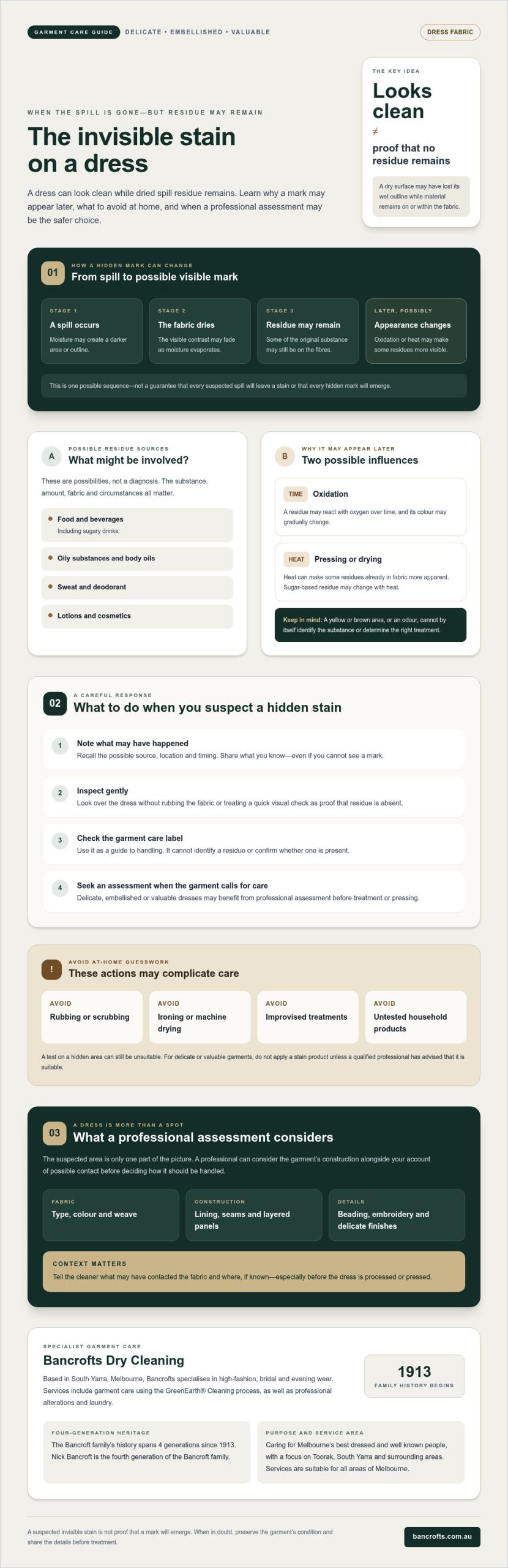
While a spill is wet, its moisture can create a darker area or distinct outline. As the moisture evaporates, that contrast may fade, leaving the dress looking unchanged. Some of the original substance, however, may remain on the fibres even when its wet outline is no longer apparent. The science of stain removal helps explain why different residues call for different treatment, rather than one approach suited to every fabric and mark.
Appearance alone can’t confirm whether a dress is free of residue. Equally, a suspected invisible stain isn’t proof that a visible mark will develop later. For delicate or valuable garments, avoid drawing conclusions from a quick look or applying a treatment simply to test what might be there.
Which everyday substances can leave hidden residue?
Food, oily substances and beverages are possible sources of stains. Body oils, sweat, deodorant, lotions and cosmetics may also leave residue that isn’t immediately obvious. These are possibilities, not a diagnosis: the substance, amount, fabric and circumstances all matter.
Consider where and when contact might have occurred. Did the dress brush against food or a drink at an event? Is there an area that sat close to skin, or where a cosmetic or lotion might have transferred? Note your observations without rubbing the fabric. This context can help a professional assess the garment, especially when its construction or finish calls for particular care.
For dress care in South Yarra and Melbourne, Bancrofts provides specialist services for high-fashion, bridal and evening wear. The business also offers laundry, alterations and garment care using the GreenEarth® Cleaning process.
Why Can an Invisible Dress Stain Reappear After Cleaning or Heat?
A mark that appears later can be disconcerting, particularly on a dress that seemed clean after a spill or cleaning. One possible explanation is oxidation: a residue reacts with oxygen over time, and its colour may gradually change. Some sugar-based residues can also change with heat. These are possible causes, not a guarantee that every hidden stain will emerge or that a visible mark identifies its source.
Discolouration and odour are separate clues. A yellow or brown area may suggest a change in residue or fabric, while an odour may be present without a visible mark. Neither observation is enough to diagnose the substance or determine the right treatment remotely. For careful invisible stain removal from dress fabric, a professional needs to assess the garment and the history of the suspected contact.
What does heat do to a hidden stain?
Heat from drying or pressing can make some residues already present in fabric more apparent, but it doesn’t explain every later mark. Industry discussion of caramelized sugar stains describes how sugar-based residue may change in appearance over time and with heat. Avoiding heat alone, however, doesn’t remove residue or guarantee that a stain won’t appear.
If you recall a possible spill, tell the cleaner before the dress is processed or pressed, even if you can’t see a mark. Share what may have contacted the fabric and where, if known. This gives the professional useful context to consider before deciding how the garment should be handled.
Why do dress fabric and details matter?
Assessment should take in the whole construction, not just the suspected spot. The outer fabric, lining, colour, seams and embellishments may each influence how a dress can be handled. Beading, embroidery, layered panels or delicate finishes can make improvised spot treatment especially risky. Don’t test a stain product on a hidden area unless a qualified professional has advised that it’s suitable.
The garment care label guides handling, but it won’t identify what caused a residue or confirm whether one is present. A professional can consider the label alongside the garment’s construction and your account of the incident. Bancrofts provides specialist care for high-fashion, bridal and evening wear using the GreenEarth® Cleaning process, with each garment’s details taken into account.
Based in South Yarra, Bancrofts serves customers seeking specialist garment care in Melbourne. Learn more about dress care at Bancrofts.
Home Treatment or Professional Stain Assessment: Which Is Safer for a Dress?
For a dress that appears clean, the safest first response is usually to gather information, not apply a product to an unseen mark. A stain does not automatically need aggressive treatment. Rubbing, soaking or using an untested remover may affect colour, texture or embellishment, and could complicate a later assessment. The right approach depends on what may have contacted the garment and how it is made.
| Suspected spill or concern | Suitable first action | Main risk | When to seek assessment |
|---|---|---|---|
| A drink or food spill, now dry and hard to see | Note what may have spilled, where it landed and when; check the garment care label. | Heat or a household stain remover may change the residue or affect the fabric. | Before cleaning or pressing, especially if the dress is delicate or valuable. |
| Possible contact with oil, cosmetics or lotion | Record the likely contact and inspect the area gently in good light. | Rubbing can spread residue or disturb the fabric’s surface. | If the source is uncertain, the fabric is lined, or the area includes detailing. |
| A dress with no visible mark but sentimental value or complex construction | Leave it untreated and share any relevant history with a professional. | Blind treatment may cause damage without addressing any residue. | Before attempting home treatment. |
When is a cautious home response reasonable?
Observation and information gathering are sensible first steps. Note the suspected source and location, then check the care label for handling guidance. Don’t rub, soak, apply heat or use a household stain remover without advice suited to the garment. If there is no visible stain, adding a product “just in case” may introduce a new substance without confirming what, if anything, needs treatment.
When should a dress go to a professional cleaner?
Choose expert assessment for a delicate, lined, embellished, high-value or sentimental dress. A cleaner can inspect its fabric and construction, consider the information you provide and discuss feasible treatment options before proceeding. Assessment can guide a considered decision, but it cannot guarantee complete removal of every stain.
Bancrofts provides specialist care for high-fashion, bridal and evening wear using the GreenEarth® Cleaning process. Based in South Yarra, Melbourne, the business also offers laundry and alterations. For invisible stain removal from dress fabric, a professional assessment can help establish an appropriate next step without assuming that aggressive treatment is needed.
What to Do When You Suspect an Invisible Stain on a Dress
If a dress may have been exposed to a spill, preserve what you know before trying to treat what you can’t see. The safest first step is to document the suspicion before treatment. A clear account of the incident can help a professional assess the garment without guesswork.
- Note the incident. Record what may have contacted the dress, where it happened and when, if you know.
- Inspect gently. Look over the likely area in good light without rubbing, pulling or scrubbing the fabric.
- Check the garment care label. Keep its instructions available, but remember they don’t identify the substance or confirm whether residue remains.
- Seek advice. Before applying anything, describe the suspected spill and ask for guidance suited to the dress.
Until you’ve received suitable advice, don’t apply heat or add an untested household product. Rubbing and scrubbing may disturb the fabric, while a remover may affect colour, texture or decorative details. These cautions matter especially when the dress is lined, delicate or difficult to replace.
What information should you give the cleaner?
Even if the dress looks unmarked, share the details that may help the assessment. A concise handover can include:
- Likely location: Point out the area or describe where you suspect contact occurred.
- Possible source: Say what may have spilled or transferred, such as a drink, food, cosmetic or lotion. If you’re unsure, say so.
- Timing: Explain when the incident happened, if known.
- Previous treatment: Disclose any water, stain remover, heat or other action already applied, even if it seemed to make no difference.
This information doesn’t guarantee a particular outcome, but it helps distinguish known details from uncertainty and supports a more considered assessment.
How should you prepare a delicate or valuable dress?
Keep the care label accessible, and mention fragile embellishments, a lining or any sentimental significance. If an area is damp, avoid folding it against another part of the garment. Don’t attempt home treatment or decide how to store a couture or bridal dress without first seeking advice suited to its construction.
Bancrofts specialises in high-fashion, bridal and evening wear care using the GreenEarth® Cleaning process. The business is based in South Yarra, Melbourne, and offers professional alterations and other garment-care services. For considered advice about a suspected mark, contact Bancrofts about dress care.
Professional Invisible Stain Care for Dresses in Melbourne
A suspected mark on a valued dress calls for considered assessment, not a promise of a particular result. Bancrofts provides specialist care for high-fashion, bridal and evening dresses using the GreenEarth® Cleaning process. If you’re considering invisible stain removal from dress fabric, sharing what may have happened before treatment gives the cleaner useful context.
What can a specialist assessment help determine?
An assessment considers the dress as a whole. Its present condition, construction and garment care label, together with your account of the suspected spill, can inform a discussion about suitable options. If you’ve already applied water, a stain remover or another treatment, mention it before the dress is examined. This history may help distinguish the original concern from any changes that followed.
Possible treatment and outcomes depend on the individual dress, the residue and the fabric’s condition. A professional can explain what may be appropriate after assessing the garment, but no assessment can guarantee complete stain removal. For a dress with delicate details or a significant personal history, clear expectations are part of responsible care.
How does Bancrofts approach valued dresses?
Bridal, evening and high-fashion dresses may carry both material and personal value. Their fabric, lining, embellishments and construction deserve consideration before any cleaning decision is made. Bancrofts’ specialist garment-care services include wedding dress cleaning in Melbourne and couture garment care.
Bancrofts is a family-owned business with a history dating to 1913, and owner Nick Bancroft leads its specialist garment-care services. This heritage informs a considered approach to garments, not a guarantee that every stain can be removed. Based in South Yarra, Bancrofts serves customers seeking specialist dress care in Melbourne.
If you suspect a hidden spill, consider discussing the dress, its care label and any previous treatment with Bancrofts before proceeding. A careful conversation can help establish an appropriate next step for the garment.
Protect Your Dress With a Considered Next Step
A dress can look clean while still carrying residue from a spill, and heat may make some hidden marks more apparent later. If you suspect contact, note what happened, check the garment care label and avoid rubbing, applying heat or using an untested product. These steps preserve useful information for a professional assessment.
Invisible stain removal from dress fabric depends on the garment, its condition and the suspected residue, so no treatment can be assumed suitable without assessment. Bancrofts offers specialist care for high-fashion, bridal and evening garments using the GreenEarth® Cleaning process.
Based in South Yarra, Melbourne, Bancrofts is a family-owned garment-care business dating to 1913, led by owner Nick Bancroft.
If a valued dress may have a hidden stain, share what you know before treatment. Arrange a careful assessment of your dress with Bancrofts and take the next step with greater confidence in its care.
Frequently Asked Questions
Can an invisible stain be removed from a dress?
Sometimes. Whether a suspected stain can be removed depends on the substance, how long it has been present, the fabric and any previous treatment. A mark that can’t be seen may still leave residue, so describe the incident to a cleaner rather than applying a product blindly. A professional can assess the dress and explain suitable options, but complete removal can’t be promised.
What causes invisible stains on dresses?
Food, oily substances and beverages can leave residue that’s easier to see while wet than after drying. Body oils, sweat, deodorant and lotions are other possible sources. These examples can’t identify a particular mark with certainty. Consider where and when contact may have occurred, then share that history with the cleaner, even if the dress currently looks unmarked.
Will heat make an invisible stain appear on a dress?
Heat from drying or pressing may make some hidden stains more visible, but that doesn’t mean every suspected stain will reappear or that heat is the only cause. If you suspect a spill, tell the cleaner before the dress is processed or pressed. Don’t try to reveal a mark with an iron, as heat may make some residues harder to address.
Should I use a stain remover on a dress if I cannot see the stain?
Avoid applying a household stain remover to an unseen mark without fabric-specific advice. A product or rubbing may affect the dress’s colour, texture, lining or embellishment, and the suitable approach depends on the garment and suspected substance. Check the garment care label, record what happened, and seek professional assessment for delicate, valuable or detailed dresses before attempting treatment.
What happens if an invisible stain is left untreated?
The result varies with the substance, fabric and time. Some oily residues may oxidise and become yellow or brown, while other marks may remain difficult to see. Heat may also reveal some hidden stains. If you know about a possible spill, tell the cleaner rather than assuming the dress is stain-free. A professional can assess the garment and discuss possible options without promising a particular outcome.
How do I tell a dry cleaner about an invisible stain?
Describe what may have spilled or transferred, where it may have contacted the dress and when it happened, if known. Mention any water, stain remover, heat or other treatment already used, even if the dress still looks clean. Point out delicate details and keep the garment care label available. This information helps the cleaner assess the dress before discussing suitable treatment.
Is professional cleaning suitable for a delicate or embellished dress?
A professional assessment is a considered option for dresses with delicate fabric, lining, beadwork, sequins, lace or embroidery. Bancrofts specialises in high-fashion, bridal and evening wear and uses the GreenEarth® Cleaning process. Based in South Yarra, Melbourne, Bancrofts can assess the individual dress and discuss suitable care options.
